Thursday
27 August, 2026
News Flash
News Flash
DHAKA, Jan 11, 2026 (BSS) – The government has formulated a unified and standardized policy on the use of scribes to ensure equal access to public and class examinations for visually impaired students, addressing long-standing inconsistencies and challenges faced by examinees across the education boards and institutions.
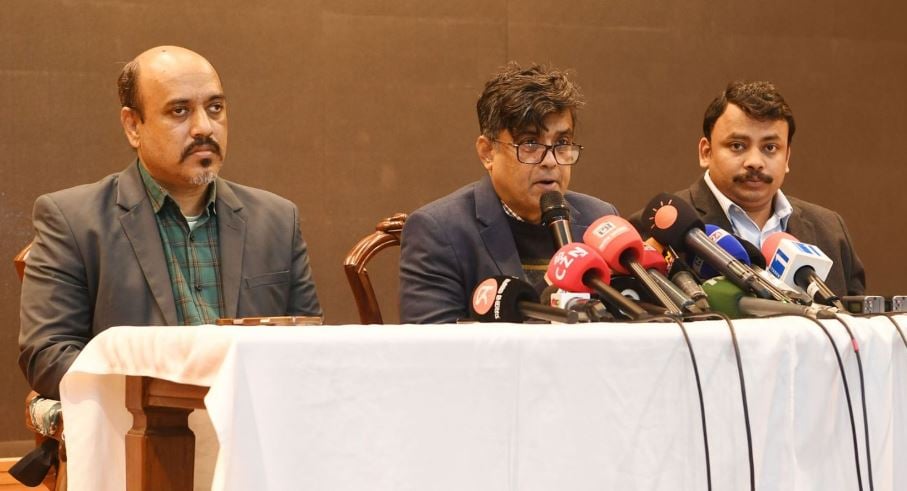
“The policy is considered important because, previously, there was no truly centralized or standardized system for appointing scribes for visually impaired examinees. Different education boards followed different rules, which often resulted in examinees being disadvantaged during examinations,” Chief Adviser’s Press Secretary Shafiqul Alam said at a briefing at the Foreign Service Academy this afternoon.
The absence of a unified framework meant that many visually impaired candidates faced uncertainty and unequal treatment, he added.
Noting that a recent survey shows that the number of visually impaired people in Bangladesh is close to half a million, the press secretary said the policy on availing scribe services in public and class examinations 2025 was formulated through the dedicated efforts of Education Adviser Professor CR Abrar.
Shafiqul Alam said the policy was prepared following extensive consultations with multiple stakeholders and experts to determine practical requirements, including how much time is needed for examinations and how the process can be made more accessible.
As a result, he said, it is expected that visually impaired students participating in public and private examinations will now find it much easier to sit for exams, and the process will also become more convenient for the scribes who assist them.
Although additional time during examinations was mentioned in earlier practices, the amount varied widely, the press secretary said, adding, under the new policy, an additional 15 minutes per hour has been clearly specified.
The policy identified existing problems in an integrated manner and step is being taken to address the issues through stakeholder consultations, Shafiqul Alam said, adding, the policy will be applicable to all public and private schools, colleges, and universities, as well as institutions under general education boards, technical education board, and Madrasah education board.
All authorities responsible for conducting public and class examinations under these institutions will be required to follow the policy, he said, adding, the policy document includes detailed schedules outlining the qualifications of scribes and the application forms required.
Noting that several organizations and institutions have already welcomed the policy, Shafiqul Alam said Education Adviser Professor CR Abrar stated that the policy will play an effective role in promoting equity in education and will serve as a reminder of the government’s responsibility toward marginalized and disadvantaged communities.
Deputy Press Secretary Mohammad Abul Kalam Azad Majumder and Senior Assistant Press Secretary Foyez Ahammad were present at the briefing.