Saturday
22 August, 2026
News Flash
News Flash

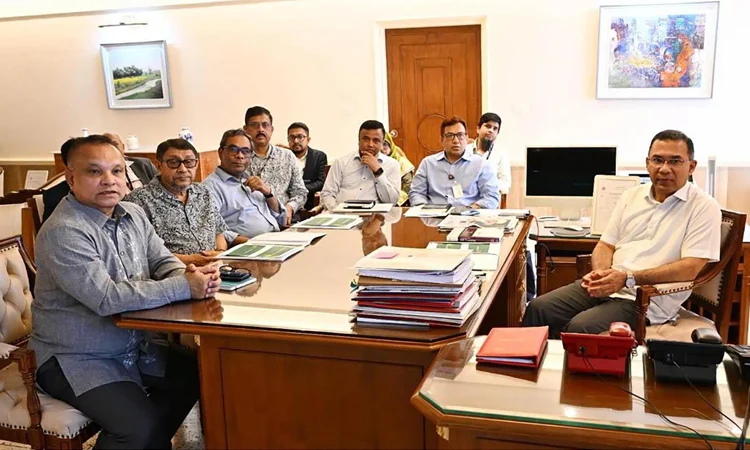
DHAKA, Jan 10, 2026 (BSS) – Finance Adviser Dr Salehuddin Ahmed today said that Bangladesh’s economy has demonstrated resilience and gradual stabilization despite inheriting a challenging macroeconomic environment from the previous regime.
“We inherited a fragile macroeconomic situation, but now there has been stability in the macro economy. Inflation has increased and is highly sensitive. It can’t be controlled by monetary policy alone; supply-side measures and market discipline are crucial. Excessive profiteering and hoarding can’t be addressed by enforcement alone—cooperation from wholesalers, traders, and retailers is essential,” he said.
The Finance Adviser was addressing the publication ceremony of the 7t edition of the ‘Banking Almanac’ at the CIRDAP International Conference Centre (ground floor) in the capital today.
Dr Salehuddin also called for collective efforts from policymakers, analysts, and the media to present a balanced view of Bangladesh’s achievements and challenges, stressing that with continued cooperation, the country can advance towards becoming a stronger and more respected economy.
Syed Ziauddin Ahmed, Executive Editor of the Banking Almanac gave the welcome address while Abdar Rahman, Project Director, gave an introduction of the book.
Dr Md. Khairuzzaman Mozumder Secretary, Finance Division, Ministry of Finance, Nazma Mobarek Secretary, Financial Institutions Division, Ministry of Finance, Nurun Nahar Deputy Governor, Bangladesh Bank, Abdul Hai Sarker, Chairman, Bangladesh Association of Banks (BAB); Chairman, Dhaka Bank PLC, spoke as special guests.
Dr. Hossain Zillur Rahman, Acting Chairman, Board of Editors, Banking Almanac and Former Adviser, Caretaker Government of Bangladesh presided over the event while Mohammad Emdadul Haque, Executive Editor of the Banking Almanac gave the vote of thanks.
Mohammed Nurul Amin, Member, Board of Editors, Banking Almanac; Former Chairman, Association of Bankers Bangladesh Limited (ABB), and HSBC CEO Mahbub ur Rahman also spoke.
The Finance Adviser said that key banking indicators such as capital adequacy ratios, provisioning levels, credit growth, retained earnings, and credit-deposit ratios reflect both existing stress and emerging adjustments.
“While conditions in 2024–25 remain more difficult compared to earlier periods such as 2010, the data show that corrective measures are gradually taking effect. Credit growth has moderated, and risk recognition has improved in several banks,” he said.
Emphasizing on dissemination of reliable financial data for credible analysis, he said selective sharing of relevant indicators—rather than entire volumes—can support evidence-based assessments of the banking sector and the broader economy.
Responsible use of such data, he said, will help counter misinformation and strengthen public understanding.
On monetary conditions, Dr Salehuddin explained that reducing interest rates is a complex process involving treasury bill yields, bank deposit rates, and overall liquidity management.
“Treasury bill rates have declined in recent months, but their full impact on market rates takes time. Maintaining balance is essential, as excessive reliance on government instruments could divert funds away from banks, weakening financial intermediation,”
Addressing inflation, he said price pressures remain a sensitive issue that cannot be resolved by monetary policy alone. Supply-side management, efficient market monitoring, and cooperation among traders and wholesalers are crucial while enforcement actions alone are insufficient to prevent excessive profiteering or hoarding.
The Finance Adviser underscored that Bangladesh’s development progress has been cumulative, achieved through sustained contributions over decades. While challenges such as inequality, poverty, and agricultural price distortions persist, the country has made notable economic and social gains.
He cautioned against excessive negativity, noting that such narratives undermine confidence and international perception.
Policy decisions, he added, cannot be driven by populism or narrow interests while fiscal and monetary policies must balance competing demands to safeguard overall stability.
Despite criticism, he expressed confidence that ongoing reforms are laying the groundwork for a more stable and resilient economy.
Dr Salehuddin Ahmed, also the former central bank Governor, noted that preliminary financial data and analytical publications—prepared under difficult circumstances—have played a critical role in improving transparency and informed policymaking.
Bangladesh Bank, along with banks, financial institutions, and the banking association, contributed significantly to sustaining these efforts, even when funding constraints existed.
Finance Secretary Dr Khairuzzaman Mozumder said although the country’s financial sector has passed through a crisis period over the last one and a half year, but the situation is now changing as there is now no problem related to L/C payments.
He said a good number of troubled banks are now turning around while efforts are on to pay back the depositors money from some financial institutions.
Noting that such Banking Almanac can be considered as a ‘statistical handbook’ for all concerned stakeholders, policy makers and researchers, Financial Institutions Division Secretary Nazma Mobarek noted that the policy makers can consider such publication as early warning to the economic issues.
Citing that publishing such book is a ‘research-oriented’ and ‘laborious’ task, Bangladesh Bank Deputy Governor Nurun Nahar said that such kind of work would help the policy makers to take their decisions in the banking sector.
BAB Chairman Abdul Hai Sarker said that lowering down the interest rate would not depend on the Association, rather on the government.
He also opined that this Banking Almanac is an important publication for the country’s financial sector and also to guide potential investment to Bangladesh.