Saturday
06 June, 2026
News Flash
News Flash
By Humayun Kabir
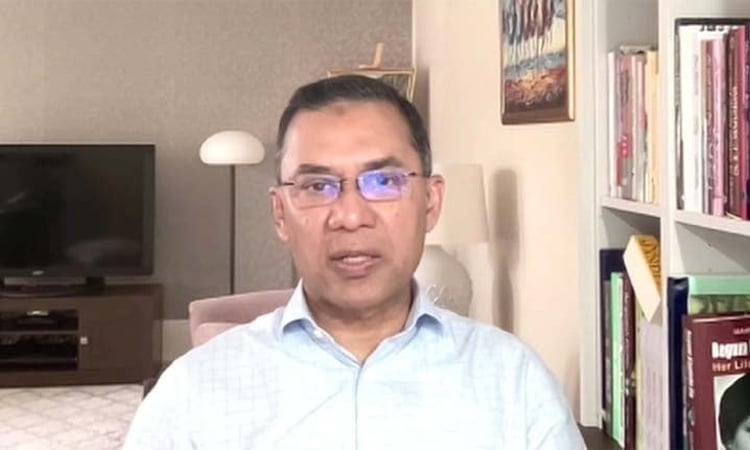
DHAKA, Dec 24, 2025 (BSS) - The day, December 25, 2025 will carry special significance in Bangladesh's political history. After nearly eighteen long years, the homecoming of BNP Acting Chairman Tarique Rahman is not confined merely to a political event; it has today become a symbol of national emotion, expectation, and hope. Such a wave of public awakening and curiosity centered on a political leader's life in exile and return to the country has rarely been seen in Bangladesh's politics.
For a long 18 years, attempts were made to keep him away from the soil of the country by trapping him in a web of conspiratorial cases. But the reality is-although he was physically abroad, mentally, politically, and ideologically he was always with the people of Bangladesh. At the center of his every thought, every decision, and every political programme was Bangladesh - its democracy and the rights of its people.
It is generally said that a leader's absence causes divisions within a party and weakens the morale of its workers. But in the case of Tarique Rahman, we have seen a completely different reality. Even while in exile, he kept the party's organizational unity intact, provided direction in movements and struggles, and instilled courage and confidence among the workers. In every critical moment of the country, he stood by like a shadow. As a result, despite the geographical distance, he never became a distant figure to the people; rather, he emerged as a quiet source of inspiration.
His long life in exile did not have any negative impact on his political capacity-on the contrary, it shaped him into a more mature leader with far-reaching vision. Usually, staying abroad for a long time creates a mental distance between a leader and the people. But Tarique Rahman transformed that distance into a different kind of closeness. He never took a break from politics; instead, he used this time to engage in deep thought and planning about the country's future, democracy, and party structure. Even from exile, he maintained contact with the grassroots, which made him even closer to ordinary workers and supporters.
Various smear campaigns were also carried out about his personal life in England. The reality is that his lifestyle was extremely simple and restrained. Even as the son of a former president and a leader of one of the country's largest political parties, he did not walk the path of luxury or extravagance. Even in an expensive city like London, he lived like an ordinary citizen. This unpretentious way of life has established him as a leader close to the people. Staying away from the arrogance of power or wealth, this philosophy of life of his proves that his politics is not for personal indulgence, but for building a welfare-oriented and just state.
Tarique Rahman's return to the homeland is taking place at a time when Bangladesh, after ending a long fascist system of rule, is moving forward on the path of a democratic journey. In this context, his role in the highest policy-making leadership of BNP is extremely important. Especially among the young generation, his arrival has created new enthusiasm. Today's youths, who have grown up for a long time in a suffocating political environment, are finding in Tarique Rahman the guidance for their future.
It is these youths who, for more than a decade and a half, have fought on the streets in the anti-fascist movement and shed blood. In this long struggle, it was Tarique Rahman himself who gave them courage and direction. This generation, which believes in technology-driven modern thinking, has seen how a leader can remain steadfast amid countless adversities and continue the struggle against autocracy. His leadership has taught the youths that one must never retreat from the path of justice. With his arrival, the youths are energized today, because they believe that under the leadership of Tarique Rahman, a Bangladesh will be built where there will be freedom of speech, merit will be valued, and an effective stand will be taken against corruption.
I firmly believe that this homecoming of Tarique Rahman is not merely the return of an individual; it is a historic moment of the rebirth of democracy in Bangladesh. The conspiracy that sought to keep him away for so long has today collapsed in the tide of the people's love and expectations. His patriotism, mental resilience, simple lifestyle, and unwavering faith in the youth-together make him today a symbol of unique leadership.
Being forced to remain in exile for a long time, staying actively engaged in the democratic struggle despite the distance, and finally returning to one's own country-this entire process is a severe acid test of patriotism. History proves that no conspiracy can keep away forever one whose place in the hearts of the people is secure. The return of Tarique Rahman is, in fact, the return of Bangladesh's self-respect.
With the new generation by his side, the dream he envisions of a modern, democratic, and discrimination-free Bangladesh will be realized-that is the belief of the people today. After a long wait, his return is heralding a new sunrise in the country's political culture. In this light, darkness will be dispelled, and Bangladesh will move forward toward new horizons of development, democracy, and sovereignty.
(Author: BNP's Joint Secretary General (International Affairs)