Sunday
02 August, 2026
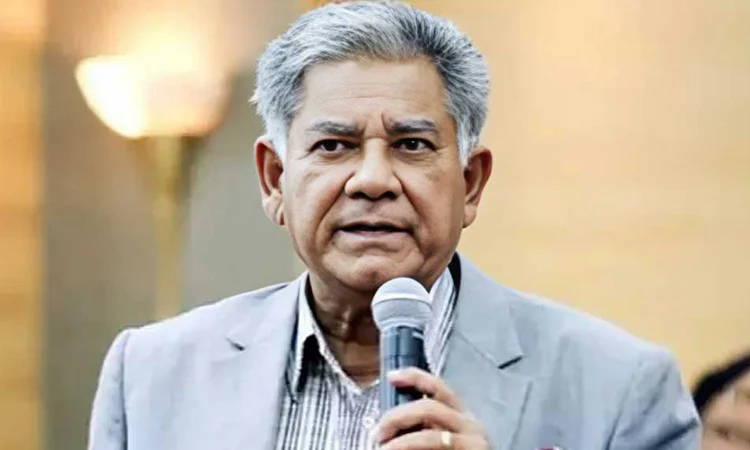
DHAKA, Dec 14, 2025 (BSS) - Labour and Employment Adviser Brigadier General (retd) Dr M Sakhawat Hussain today said that civil society must play a decisive role in sustaining reform initiatives taken by the interim government.
"We could not meet all expectations, but we laid important groundwork," he said while addressing the inauguration programme of the "Bangladesh Reform Tracker" by the Citizen's Platform for SDGs, Bangladesh, at the Bangladesh-China Friendship Conference Centre here as the chief guest.
The adviser said the government faced severe structural and administrative challenges after assuming office, including a weakened state apparatus and limited institutional capacity.
He said initiatives such as the formation of reform commissions and the National Consensus Commission reflected the government's commitment to reform, despite time constraints and resistance from vested interests.
Completing all changes within a short period was unrealistic, he said, adding that political parties must now carry the reform process forward.
Highlighting labour law reforms, the adviser described them as a major achievement, noting that the changes were undertaken in consultation with the International Labour Organization (ILO) and amid engagement with the European Union and US trade delegations.
These reforms will have long-term positive implications, he added.
Debapriya Bhattacharya, convenor of the Citizen's Platform and distinguished fellow at the Centre for Policy Dialogue (CPD), presided over the event.
He said reforms cannot be effective or sustainable without active participation from citizens.
About the Bangladesh Reform Tracker, he said it will monitor the implementation and progress of the government's reform measures.
Deputy Resident Representative of UNDP Bangladesh Sonali Dayaratne joined the event as the guest of honour, while founder and current Chairman of the Centre for Policy Dialogue (CPD) Professor Rehman Sobhan also addressed the programme.
Election Commissioner Brigadier General (Retd.) Abul Fazal Md. Sanaullah, Anti-Corruption Commission Chairman Dr. Mohammad Abdul Momen, Editors’ Council President Nurul Kabir, former Election Reform Commission Chairman Dr. Badiul Alam Majumdar, Executive Director of Transparency International Bangladesh (TIB) and former head of the ACC Reform Commission Dr. Iftekharuzzaman, former Media Reform Commission head Kamal Ahmed, former Labour Reform Commission member Razekuzzaman Ratan and Kamran T. Rahman, among others, spoke at the event as special guests.
Towfiqul Islam Khan, Additional Research Director of local think tank Centre for Policy Dialogue (CPD), presented the keynote paper titled Bangladesh Reform Tracker.
Election Commissioner Brigadier General (Retd.) Abul Fazal Md. Sanaullah underscored the need for trust, active citizen engagement and structural reforms to ensure credible and inclusive elections in Bangladesh.
He noted that the Election Commission’s mandate goes beyond the conduct of elections, encompassing broader responsibilities essential to strengthening the democratic process.
Sanaullah said public trust in institutions has weakened over the past decades.
“Our first task is to restore confidence. Consolidation and growth will follow gradually. Not all expectations can be met overnight,” he added.
Describing the progress of electoral reforms as significant, he said steps have been taken to regulate campaign expenditure, reduce poster pollution and ensure the representation of marginalised groups, including women, persons with disabilities and expatriate voters.
He also lauded initiatives aimed at enhancing transparency, including public scrutiny of candidate declarations, financial disclosures and digital monitoring mechanisms.
Sanaullah emphasised that sustainable electoral reform depends on collective political will, active citizen participation and strong institutional resilience.