News Flash

SANGSAD BHABAN, June 11, 2026 (BSS) - A total budget of Tk 467 crore has been
proposed for the Ministry of Labour and Employment for the 2026-27 fiscal
year, marking an increase of Tk 77 crore compared to the previous year.
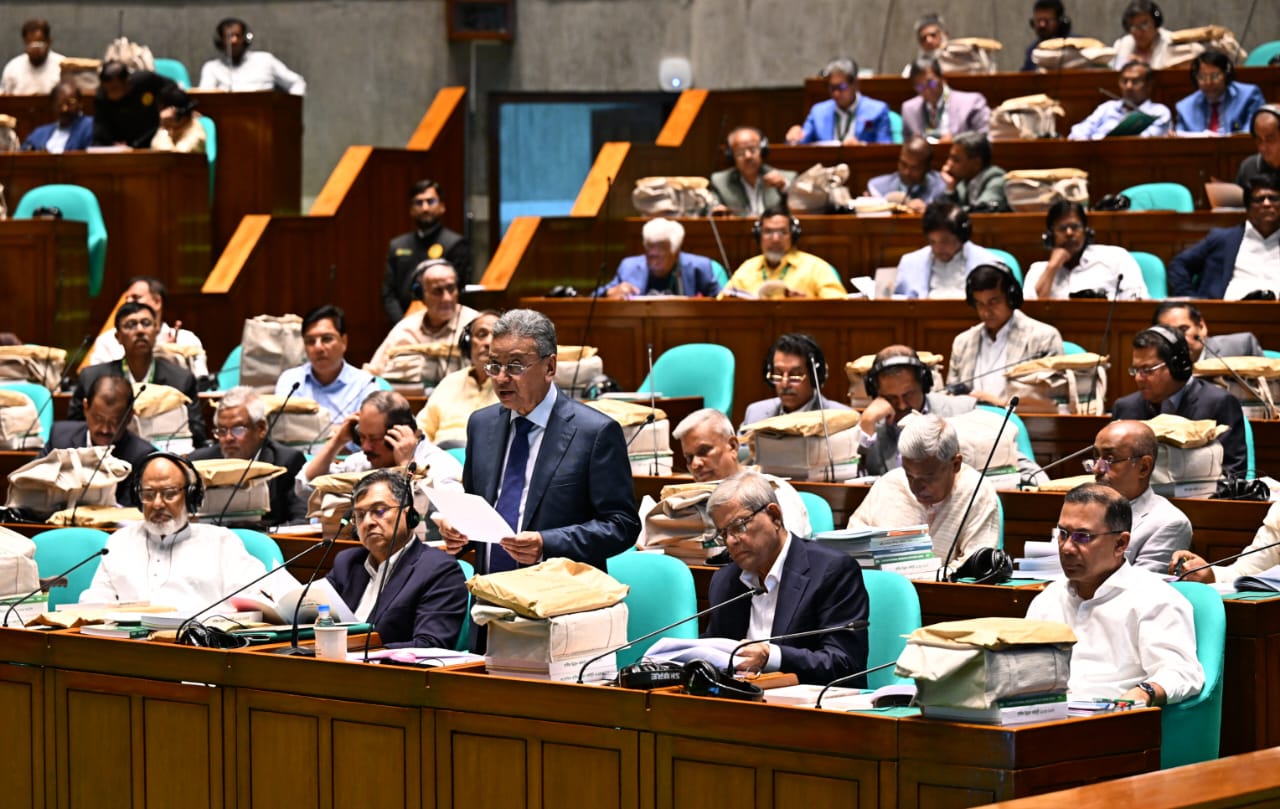
Finance Minister Amir Khosru Mahmud Chowdhury placed the proposal in the
Jatiya Sanshad today while unveiling the national budget. Of the proposed
allocation, Tk 236 crore has been set for operational expenditure and Tk 231
crore for development spending.
According to the budget proposal, priority will be given to protecting
workers' rights, ensuring safe and decent working conditions, strengthening
trade union registration, improving industrial relations, resolving labour
disputes, and implementing minimum wage policies more effectively.
It also prioritises expanding social protection for workers, providing
employment services for the working-age population, safeguarding women
workers' rights, and eliminating child labour.
Strengthening labour standards compliance in factories and establishments and
continuing coordination with the International Labour Organization (ILO) and
other international bodies will remain key focus areas.
Skill development and labour-related research have also been emphasised in
the new budget.
Key initiatives include launching government "Employment Exchange" centres at
district and upazila levels, along with establishing daycare and
breastfeeding corners at workplaces.
To ensure fair wages, sector-based wage boards will be formed, while further
amendments to the Labour Rules, 2015 (amended 2022), have been proposed.
The government also plans to modernise and strengthen the Department of
Inspection for Factories and Establishments and implement a project to set up
13 district offices.
In his budget speech, the finance minister underscored that employment
generation remains one of the government's top priorities.
He said the government is pursuing sector-based employment generation under
the principle of "We will work, we will build the nation," aiming to expand
both domestic and foreign investment through economic reforms.
He announced plans to create nationwide employment exchanges to connect job
seekers with available vacancies based on merit and skills, while also
providing training support for those lacking required competencies.
The government has set a target of creating 2 lakh new jobs annually in the
technology sector, alongside generating an additional 8 lakh indirect jobs
through freelancing and creative industry training.
Special employment initiatives will also target marginalised groups,
including rural unemployed persons, homemakers, elderly citizens and informal
workers, through training in agriculture, cottage industries, digital skills
and small business development, coupled with microcredit support.
On labour welfare, he said fair wages will be ensured through periodic
minimum wage reviews, while integrated workplace safety inspections will be
strengthened in line with ILO standards. Compensation for workers injured or
killed in workplace accidents will also be ensured through a unified Labour
Information Management System (LIMS).
The minister also highlighted the enactment of the Bangladesh Labour
(Amendment) Act, 2026 to further strengthen legal protections for workers.
Special emphasis was placed on women and child-friendly workplaces, including
strict enforcement of a zero-tolerance policy against harassment, expansion
of safe transport and accommodation facilities for women, and the
introduction of a women-operated "Pink Bus Service".
He also noted that a national action plan (2026-2030) has been prepared to
eliminate child labour and ensure a safe environment for children.
The government, he added, is committed to building an inclusive labour market
ensuring dignity, safety and fair opportunities for all workers.