News Flash

SANGSAD BHABAN, June 11, 2026 (BSS)- Finance Minister Amir Khosru Mahmud Chowdhury has proposed for allocating Taka 28,881 crore for the agriculture sector in the proposed budget of FY 2026-27 fiscal.
The allocation is 3.2 percent of the country’s total GDP.
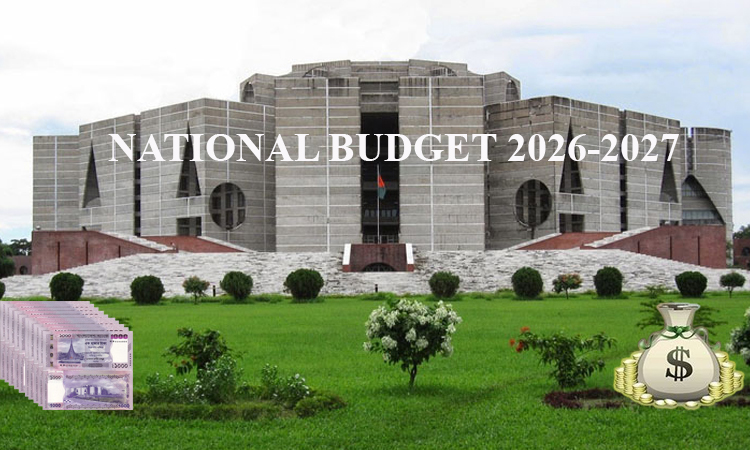
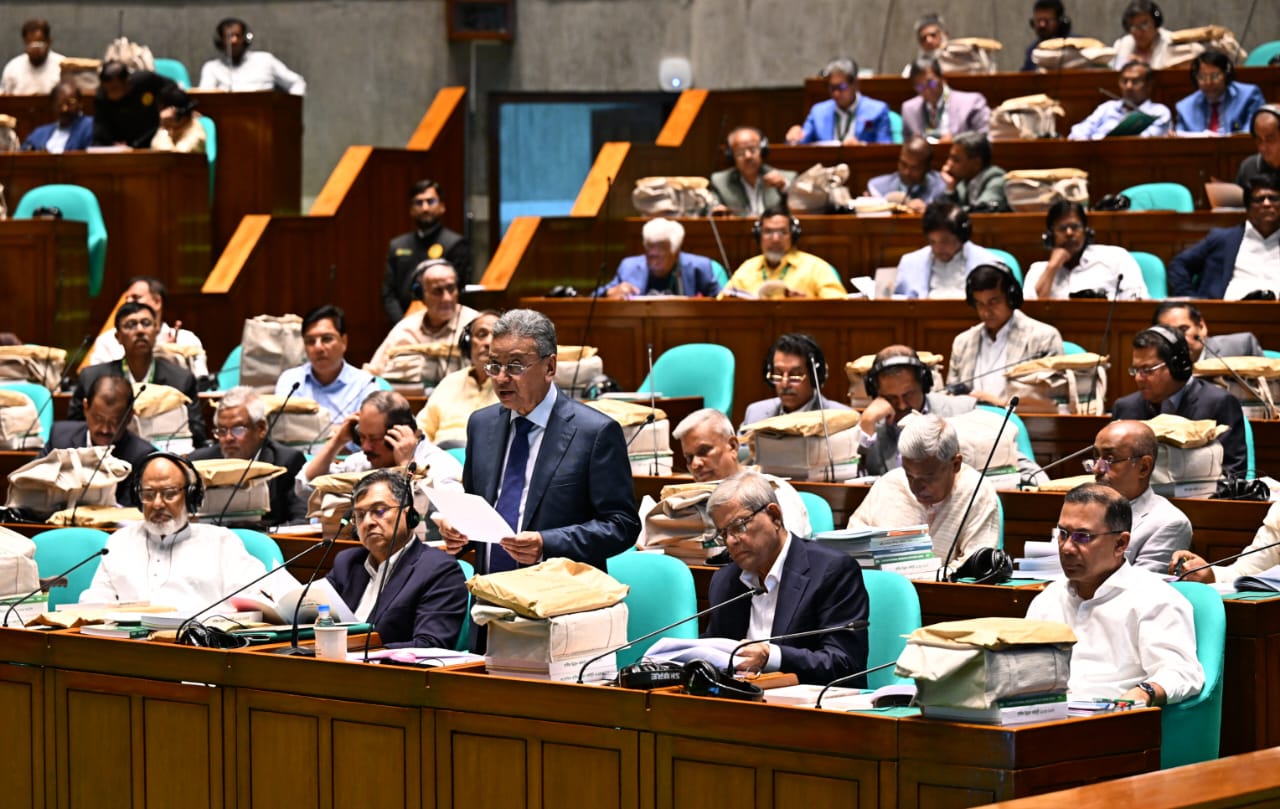
The allocation was proposed while Finance and Planning Minister Amir Khosru Mahmud Chowdhury unveiled the national budget for 2026-27 fiscal year at the Jatiya Sangsad here with Speaker Hafiz Uddin Ahmed Bir-Bikram in the chair.
“A total of Taka 28,881 crore have been proposed for the agriculture sector where Taka 20,935 crore for operating expenditure and Taka 7,946 crore for development”, according to the proposed budget.
In 2025-26, the budgetary allocation for the agriculture sector was Taka 27,224 crore and Taka 24,825 crore was in the revised budget.
Of the total proposed budget, Taka 22,963.47 crore has been allocated under the head of recurrent expenditure and Taka 5,917.91 crore for capital expenditure.
Of these allocations, Taka 1671 crore will be spent for wages and salaries, Taka 255.55 crore for administrative expense and Taka 17,001 crore for public nonfinancial corporations subsidies.
In the revised budget of 2025-26, Taka 1550.89 crore earmarked for wages and salaries in cash and over Taka 200 crore for administrative expenses.
While presenting the national budget of 2026-27, the finance minister said, “We are committed to developing the agricultural sector, which is the foundation of the country's economy and food security, into a self-reliant, climate-resilient and technology driven modern system”.
The finance minister said special priority was given to ensure affordable price of agricultural inputs including fertilizers, seeds, and irrigation aimed at reducing production costs at farmers’ level, as well as to promoting agricultural mechanization.
One of the principal commitments of the present government is to transform agriculture into a key driver of national prosperity, he said.
Above all, our objective is to ensure safe food and nutritional security through good agricultural practices and achieve the sustainable transformation of the rural economy, said the finance minister.
For the welfare of the farmers, he said, fishermen, livestock farmers, and salt cultivators have also been brought under the coverage of this special Farmer Card programme which was launched on April 14, this year.
As a pre-pilot for the 2025–26 fiscal year, 22,065 farmers have been provided with cards across 11 blocks in 11 upazilas of 10 districts, he said.
In the 2026–27 fiscal year, 42.5 lakh cards will be distributed across 100 upazilas, with plans to gradually provide Farmer Card to all farmers in the country.
Through this card, landless, marginal, and small farmers will receive an annual one-time cash assistance of Taka 2,500, along with an additional 10 types of multifaceted benefits as per electoral commitments of BNP.
The minister said to strengthen the agricultural sector, agricultural and rural credit programs will be expanded through scheduled banks. Loans at a 4 percent concessional interest rate for the cultivation of pulses, oilseeds, spices, and maize will continue in order to reduce import dependency.
In order to address the impacts of climate change, initiatives have been taken to strengthen agricultural research for the development of salt-tolerant and drought-resistant crop varieties, the minister added.
In addition, to create employment opportunities for youth, initiatives have been taken to formulate an “Agropreneurship Start-up Policy” and an “Agricultural Cooperative Policy” to ensure the balanced distribution of modern agricultural technology and agricultural credit on a large scale.