Saturday
29 August, 2026

By Didarul Alam
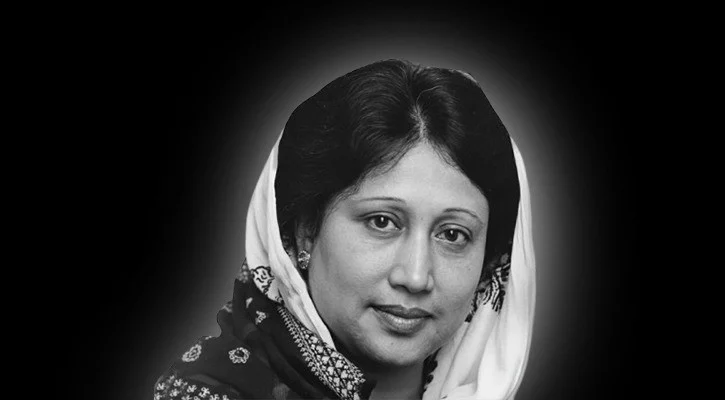
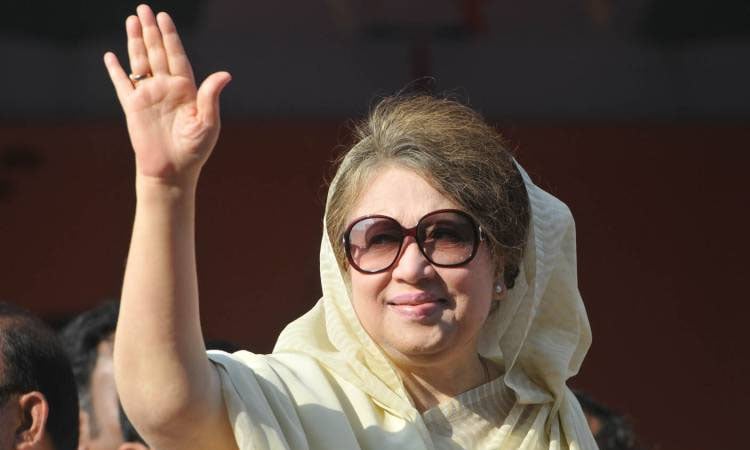
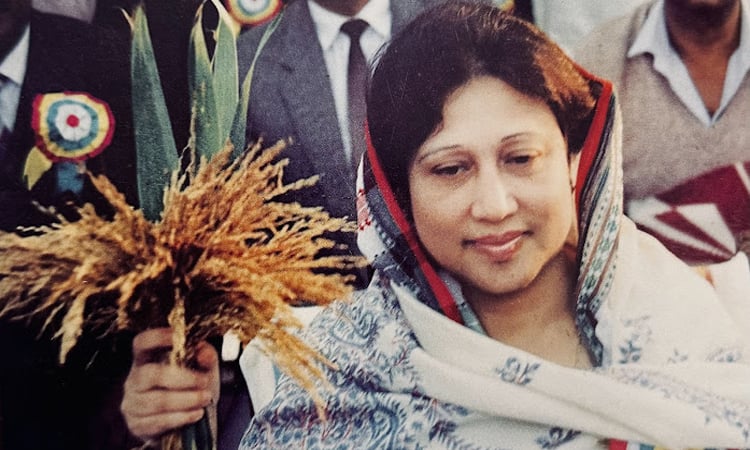
DHAKA, Dec 30, 2025 (BSS) - Begum Khaleda Zia holds a unique position in Bangladesh's political history. As the country's first woman to serve as Prime Minister -- and only the second democratically elected female head of government in the Muslim world -- her leadership marks a defining chapter not only in Bangladesh but also in both South Asian and global politics.
Her reputation as a steadfast and "uncompromising" leader was forged through her active role in movements resisting authoritarianism, autocracy, and fascist tendencies, alongside her participation in the nationwide struggle to restore democratic governance.
Khaleda Zia continues to stand as a central figure in Bangladesh's democratic struggles, political transitions, and the shaping of its modern state.
More than just a political leader, her contributions and public life have elevated her into an institution in herself -- an enduring presence in the living history of the nation.
Birth:
Begum Khaleda Zia was born on 15 August 1945, at a moment when the world had just emerged from the devastation of the Second World War. Her birthplace was Jalpaiguri, then located in India.
Childhood and Education:
The first two years of Khaleda Zia's life were spent in Jalpaiguri. In 1947, following the emergence of Pakistan as an independent state, her father, Iskandar Majumder, relocated the family to Dinajpur, where they settled permanently. Khaleda Zia's childhood and early education unfolded in this northern district.
At the age of five, she was admitted by her father to St. Joseph's Convent in Dinajpur, where she received her primary education. She later attended Dinajpur Government Girls' High School, from which she passed her matriculation examination in 1960. Subsequently, she enrolled at Surendranath College in Dinajpur, completing her Intermediate examinations in 1963.
Early Life Background:
Begum Khaleda Zia's father, Iskandar Majumder, was born in Shreepur village of present-day Parshuram Upazila in Feni District. A businessman by profession, he had initially moved to Dinajpur to expand his commercial activities. When Pakistan became an independent country in 1947, he established permanent residence in Mudipara, Dinajpur.
As a student of grade eight, Iskandar Majumder had gone to Jalpaiguri in 1919 to live with his sister and brother-in-law. Jalpaiguri, now part of India, was where he completed his secondary education and took up employment at a tea garden. He later left the job and entered the tea trade, eventually becoming elected secretary of the Jalpaiguri Tea Garden Association.
On 19 March 1937, he married Tayeba, a native of Chandanbari in Boda Upazila of present-day Panchagarh District. The family was locally known as the "Tea Family". The couple had five children -- three daughters and two sons -- with Khaleda Zia being the third. Her mother, Tayeba Majumder, was a social worker who operated a training center for underprivileged women at their home in Dinajpur. Both of Khaleda Zia's parents are no longer alive.
Marriage:
On 5 August 1960, in her parental home at Mudipara in Dinajpur, Khaleda Khanam Putul married a young army officer, Captain Ziaur Rahman.
Married Life:
The first four years of married life for Zia and Khaleda were spent in Dinajpur. Khaleda Zia also resided for some time at Ziaur Rahman's ancestral home in Bagbari, Bogura. Owing to her husband's professional postings, she lived in various locations throughout the early years of their marriage.
When Ziaur Rahman was posted to Pakistan, Khaleda Zia moved there with him in 1965. The couple had two sons. Their elder son, Tarique Rahman, was born on 20 November 1965 and currently serves as the Acting Chairman of the Bangladesh Nationalist Party (BNP). Their younger son, Arafat Rahman (Koko), was born on 12 August 1970 and passed away on 24 January 2015 in Malaysia. He had been involved in business as well as in activities related to the Bangladesh Cricket Board.
During Ziaur Rahman's Presidency, Khaleda Zia maintained a life away from active politics, devoting her time primarily to raising her two sons and managing the household.
During the Liberation War:
In 1969, Major Zia returned to Dhaka from Pakistan and was appointed Second-in-Command of the 2nd Battalion of the East Bengal Regiment at Joydevpur sub-cantonment. That same year, he was sent to West Germany for a four-month training program.
At the onset of Bangladesh's independence struggle in March 1971, Major Zia was transferred to the Chittagong cantonment. He revolted against the repressive military actions of the Pakistan Army and proclaimed the independence of Bangladesh for the first time from a local radio station.
To join the liberation struggle, Zia had to leave his family in an unprotected and uncertain situation. For Khaleda Zia, this period was marked by instability and constant threat. During the early two months of the war, she remained in hiding in Chittagong with her two children.
As Pakistani forces tightened control over the area, remaining in concealment became increasingly difficult. With the help of her elder sister, Khurshid Jahan Haque, Khaleda Zia decided to leave Chittagong.
On the evening of 16 May 1971, wearing a veil and accompanied by her children, she travelled by launch to Narayanganj and from there eventually reached Dhaka, where she continued living in hiding at the homes of relatives and acquaintances.
Amid these circumstances, on 2 July 1971, she was detained from a house in Siddheswari and taken, along with her two sons, to the old Parliament building, which at the time was office of the Martial Law authorities. She was later moved to a residence within the Dhaka cantonment.
In the first week of December, when the war was going on, Indian Air Force jets carried out bombing missions in various parts of Dhaka. One evening, a bomb exploded close to the house where she was being held, creating a terrifying situation. Khaleda Zia remained in military custody until Dhaka was liberated on 16 December 1971.
During her detention, she displayed courage, composure, and a firm resolve to endure adversity. She remained calm through the crisis and demonstrated a steadfast determination to face any circumstance.
As the wife of a distinguished military officer leading the struggle for independence, Khaleda Zia maintained the modest and disciplined lifestyle typical of an ordinary Bangladeshi homemaker.
Death of Ziaur Rahman:
Khaleda Zia would often stay awake late into the night waiting for her husband, Ziaur Rahman. She would not go to sleep until he returned home. Books and newspapers were her companions during those hours. When Zia arrived, they would share dinner and then retire for the night.
At 10 pm, on 30 May 1981, Zia called Khaleda Zia from Chittagong, informing her that he would return the next day and that he was well. This, however, became the final phone call she would receive from him.
Conspirators brutally assassinated Zia, bringing an abrupt end to their harmonious married life of twenty-one years.
On the morning of 1 June 1981, Khaleda Zia came to know of the cruel and barbaric killing of her husband. She was left speechless by the news. Amid the grief and lamentation of hundreds of thousands of mourners, Shaheed Ziaur Rahman was laid to rest beside Crescent Lake, on the northern side of the Parliament complex. His funeral prayer became one of the largest in the world. The nation expressed its profound and genuine affection for Zia that day.
On 3 June 1981, Khaleda Zia visited her husband's mausoleum, and her arrival created an intensely emotional scene in the surroundings of the shrine. In a television interview later that month, she described the simplicity and modesty of her late husband's household life.
Beginning of Political Life in 1982:
When President Ziaur Rahman, founder of the Bangladesh Nationalist Party (BNP), was assassinated on 30 May 1981, Khaleda Zia was essentially a homemaker. She had neither political aspirations nor any significant involvement in political activities. After Zia's death, Justice Abdus Sattar was elected President.
On 24 March 1982, however, the then Army Chief, Lieutenant General Hussain Muhammad Ershad, seized state power through a military decree, removing President Sattar from office.
Amid internal conflicts within the BNP and the defection of several party leaders to Ershad's cabinet, the party became fragmented, disoriented, and organizationally weakened.
Ershad undertook repeated attempts to deepen divisions within the party. It was during this uncertain moment that Khaleda Zia unexpectedly entered politics. She had no prior intention of doing so. Her entry effectively thwarted all conspiracies aimed at dismantling the BNP. At the request and encouragement of party leaders, Khaleda Zia joined the BNP in 1982 as a general member. Within a short time, she rose to become Vice-Chairperson in 1983 and Chairperson in August 1984.
Struggle and Leadership:
After assuming responsibility within the party, Khaleda Zia launched a comprehensive movement for the restoration of democracy. She led the seven-party alliance formed in 1983. Her firm decision was not to participate in the controversial 1986 election, and her leadership in sustained opposition to Ershad's regime, led the authoritarian government to detain her several times between 1983 and 1990. During this period, a number of activists were killed by the regime while participating in the pro-democracy movement.
The movement grew increasingly widespread. Under Khaleda Zia's leadership and strategic vision, the Jatiyatabadi Chhatra Dal (Nationalist Student Front) won 270 out of 321 student union elections, giving further strength to the mass movement.
Her leadership during the mass uprising that culminated in the fall of Ershad on 6 December 1990 remains unforgettable.
Through this long struggle for democracy, Khaleda Zia earned the reputation of an "uncompromising" leader. Her stance against dictatorship, autocracy, and fascism remained unwavering throughout.
Khaleda Zia's First Election:
Following the fall of the Ershad regime on 6 December 1990 through a massive popular uprising, Begum Khaleda Zia contested five constituencies in the Fifth National Parliamentary Election held on 27 February 1991. She won all five seats by a significant margin. In that election, the BNP secured a parliamentary majority.
The Country's First Female Prime Minister:
With the BNP's victory in the 27 February 1991 election, a government was formed under the leadership of Begum Khaleda Zia. She became the first female Prime Minister of Bangladesh, and the second elected female head of government in the Muslim world.
Khaleda Zia earned a rare distinction not only in Bangladesh's political history but also in the Muslim world, emerging as a pioneering woman leader.
On 19 March 1991, she was appointed Prime Minister of the Government of the People's Republic of Bangladesh following the Fifth National Parliamentary Election. Her government established the parliamentary form of governance in the country.
On 2 April, she introduced the bill in Parliament on behalf of the government. On the same day, she introduced the Eleventh Amendment Bill, enabling the Chief Adviser of the caretaker government, Chief Justice Shahabuddin Ahmed, to return to his judicial position. Both bills were passed unanimously in Parliament on 6 August 1991.
Notable Achievements during the First Term (1991-1995):
Under Begum Khaleda Zia's leadership, Bangladesh transitioned into parliamentary democracy. Her first term witnessed increased employment, expansion of export-oriented industries, advancement in women's employment, and positive economic growth. Employment in the ready-made garment sector increased by 29 percent within five years, with approximately 200,000 women newly joining the workforce.
She raised the issue of equitable Ganges water distribution at the United Nations, strengthening initiatives to ensure Bangladesh's fair share. During her 1992 visit to the White House, she brought international attention to the Rohingya crisis, following which the Myanmar government signed an agreement with Bangladesh on the repatriation of Rohingya refugees.
Second Participation in Election - 15 February ,1996 :
In the Sixth National Parliamentary Election held on 15 February 1996, Khaleda Zia again became Prime Minister with an overwhelming majority. Within a brief period, she passed the caretaker government bill and transferred power peacefully. This step was taken as the main opposition, the then Awami League, of the fifth parliament had enforced 173 days of continuous hartals over various issues, and eventually its Members of Parliament resigned.
Due to the absence of the required number of MPs needed for constitutional amendments, Khaleda Zia held the Sixth National Parliamentary Election. The widely discussed bill establishing the caretaker government system was passed in that parliament. She handed over power to the caretaker government, paving the way for a new election.
Third Participation in Election - 12 June 1996:
Under the caretaker government formed as per the Sixth Parliament's legislation, the Seventh National Parliamentary Election was held on 12 June 1996. Although the BNP did not gain a majority to form the government, it became the largest opposition party in the country's history by securing 116 seats. In that election, Begum Khaleda Zia won from five constituencies across different districts.
Formation of the Four-Party Alliance:
In 1999, under the leadership of Begum Khaleda Zia, the Four-Party Alliance was formed comprising the BNP, Jamaat-e-Islami, Bangladesh Jatiya Party, and Islami Oikya Jote. Under her leadership, the alliance organized joint movements and programs against the then Awami League government's undemocratic practices and misgovernance.
Eighth National Parliamentary Election - 1 October 2001:
Under the caretaker government, the Eighth National Parliamentary Election was held on 1 October 2001. In that election, the Four-Party Alliance led by the BNP secured an overwhelming majority. Begum Khaleda Zia assumed office as Prime Minister for the third time. She contested five constituencies across different regions of the country and won all of them.
Major Achievements during the 2001-2005 Term:
Her government achieved notable progress in women's education, primary education, employment, infrastructure development, and economic reforms. In recognition of her contributions to women's empowerment, Forbes magazine ranked her 29th among the world's most powerful women in 2005.
During her tenure, the government introduced several landmark initiatives, including free primary education, free education for girls up to the tenth grade, stipends and food assistance programs, and the extension of the age limit for government employment. Her administration was also praised for its success in curbing public examination malpractice.
Caretaker Government and the Notorious "One-Eleven":
In accordance with the Constitution, Khaleda Zia handed over power to the caretaker government in November 2006. The caretaker government announced the schedule for the Ninth National Parliamentary Election, setting 22 January 2007 as the election date. Political parties submitted nomination papers accordingly.
However, on 11 January 2007, a military-backed caretaker government assumed power, and the scheduled 22 January election was suspended.
Arrest and Political Crisis:
On 11 January 2007, under a declared state of emergency, a caretaker government led by Fakhruddin Ahmed came to power with the backing of the military. Many of its actions, particularly its political reform initiatives, provoked widespread controversy.
Efforts to sideline Begum Khaleda Zia from politics became increasingly evident. The One-Eleven regime dealt a significant blow to the BNP and attempted to engineer a split within the party. Attempts were made to create divisions through the then-Secretary General Abdul Mannan Bhuiyan.
Recognizing the situation, the BNP expelled him and appointed senior leader Khandaker Delwar Hossain as Secretary General.
On the early morning of 3 September 2007, Begum Khaleda Zia and her younger son, Arafat Rahman Koko, were arrested from their residence on Shaheed Mainul Road in Dhaka Cantonment. Earlier, on 7 March 2007, her elder son and then-Senior Joint Secretary General of the BNP, Tarique Rahman, had been arrested.
Begum Khaleda Zia was released on 11 September 2008, and Tarique Rahman on 3 September. After their arrests, Tarique Rahman and Arafat Rahman Koko were subjected to torture by the joint forces.
Following their release, Tarique Rahman was sent to London for medical treatment, while Arafat Rahman Koko was sent to Thailand. He later moved to Malaysia, where he died on 24 January 2015.
Life in Jail during One-Eleven:
Following her arrest, Begum Khaleda Zia was confined in a designated sub-jail within the National Parliament complex. During this period, both of her sons were also imprisoned. The repression and hardships inflicted on the Zia family by the One-Eleven emergency caretaker government were severe and unprecedented.
Simultaneously, senior BNP leaders, leaders of other political parties, former ministers, and civil servants were arrested and prosecuted.
Amid continuous efforts by the military-backed caretaker government to divide the BNP, Khaleda Zia, despite being in prison, remained the symbol of unity for the party.
Post One-Eleven Crisis:
The events of One-Eleven in 2007 constituted a far-reaching conspiracy. The principal aim was to depoliticize the country and eliminate nationalist political forces. On 11 January 2007, under the leadership of the then Army Chief, General Moyeen, a new form of military intervention took place, and a state of emergency was imposed.
Ninth National Parliamentary Election 2008:
The military-backed caretaker government held the Ninth National Parliamentary Election on 29 December 2008. Despite numerous crises and conspiracies, the BNP, under the leadership of Begum Khaleda Zia, participated in the election.
In that election, the BNP became the opposition party. Begum Khaleda Zia won all three constituencies she contested, securing large margins of victory.
The election was widely considered a controlled and predetermined process orchestrated by behind-the-scenes actors. Nevertheless, Begum Khaleda Zia participated in the election in the interest of political stability and democracy. She served as the Leader of the Opposition in that Parliament.
Victim of Political Vendetta under the Awami League (2009-2014):
Following the Ninth National Parliamentary Election, and within just two months of the Awami League assuming power, a tragic incident occurred at the BDR Headquarters in Pilkhana, Dhaka, in which 74 individuals, including 57 highly accomplished army officers, were killed in what was described as a mutiny.
On 13 November 2010, Begum Khaleda Zia was forcibly evicted from her residence of 40 years, a home deeply connected to the memories of Shaheed President Ziaur Rahman. It was the residence where her sons Tarique Rahman and Arafat Rahman Koko were born and raised, and where key moments of their childhood, adolescence, and family life, including marriages and the birth of grandchildren, took place.
That evening, speaking to journalists at her political office in Gulshan, an emotional Khaleda Zia stated, "Through state-sponsored terrorism, I have been driven out of the home filled with President Zia's memories". She was compelled to leave behind all household belongings accumulated over decades and was expelled with only the clothes she was wearing. The grief she expressed resonated across the country, moving countless citizens to tears.
Abolition of the Caretaker Government System and the Political Crisis:
On 30 May 2011, the Awami League government under Sheikh Hasina unilaterally decided to abolish the caretaker government system, even before the Supreme Court delivered its full verdict on the relevant case.
In response, the BNP-led 18-Party Alliance launched widespread protests. A United Nations delegation later visited Bangladesh to engage with both the government and political parties in an effort to mediate the election-related impasse.
Amid this tension, and boycotted by the BNP and most other major political parties, the Tenth National Parliamentary Election was held on 5 January 2014 under Sheikh Hasina. A total of 153 candidates from the Awami League-led alliance were elected uncontested. The voter-less election was widely regarded as an "episode of stigma" in the nation's political history.
Khaleda Zia was confined to her political office to prevent her participation in political activities, with barriers such as sand-laden trucks placed strategically to block her movement. Hundreds of thousands of BNP and opposition activists faced fabricated cases, and thousands were arrested.
During this period, the government initiated judicial proceedings against members of the Zia family, including Begum Khaleda Zia, Tarique Rahman, Arafat Rahman Koko, and Tarique Rahman's wife, Dr Zubaida Rahman.
Legal Cases and Sentencing:
On 8 February 2018, in the Zia Orphanage Trust corruption case, Khaleda Zia was sentenced to five years of imprisonment and transferred to the old abandoned Dhaka Central Jail on Nazimuddin Road.
Following an appeal by the Anti-Corruption Commission, the High Court later extended the sentence. She was also convicted in the Zia Charitable Trust case.
Despite what many described as politically motivated and predetermined verdicts aimed at undermining her politically, she remained steadfast. Maintaining her faith in the judiciary, she subsequently secured acquittal in appeals related to several of these cases.
Illness during Incarceration:
After her imprisonment on 8 February 2018, Khaleda Zia's health deteriorated significantly. She suffered from kidney and liver complications, diabetes, arthritis, and several other ailments. While receiving treatment at PG Hospital (now Bangladesh Medical University) under prison custody, she was released on 25 March 2020 under an executive order, conditional upon her receiving medical care at home, as the COVID-19 pandemic spread across the country. Many, including BNP leaders, alleged that her severe health decline occurred due to deliberate neglect.
Eleventh National Parliamentary Election - 30 December 2018:
The BNP-led Jatiyo Oikya Front participated in the Eleventh National Parliamentary Election, held on 30 December 2018 under Prime Minister Sheikh Hasina.
Despite assurances of a fair and neutral election, widespread irregularities were reported. Ballot boxes were allegedly filled the night before polling by law enforcement agencies and officials aligned with the ruling party. The election is widely regarded as another dark chapter in the nation's electoral history.
Most BNP candidates were prevented from campaigning, and many were physically assaulted or arrested. Ultimately, BNP candidates were officially declared winners in only six constituencies. Numerous opposition activists were imprisoned through fabricated and "ghost" cases while many were harassed and arrested.
Political Movement and the Twelfth Parliamentary Election:
The BNP-led 20-Party Alliance continued its movement demanding restoration of the caretaker government system and holding of free and fair elections.
Nevertheless, the Twelfth National Parliamentary Election was conducted on 7 January 2024 under Sheikh Hasina without the participation of opposition parties. It became known as a "dummy election", as only Awami League-endorsed or AL-backed rebel candidates contested, with the selection process reportedly guided by the party's high command.
In the lead-up to the election, thousands of BNP leaders and activists, including top leadership, were arrested.
The 2024 Mass Uprising and Khaleda Zia's Release:
Widespread student protests erupted following a controversial High Court verdict concerning quota reforms. University and college students across the country demanded changes, and the movement soon gained nationwide momentum. On 16 July 2024, police fatally shot Abu Sayeed, a student of the English Department at Begum Rokeya University, Rangpur, during a public protest. Several others were killed the same day in violent crackdowns.
This tragedy galvanized the nation. Students, BNP activists, political leaders from various parties, and ordinary citizens joined the movement.
From the outset, the BNP expressed full support, while Jatiyatabadi Chhatra Dal actively participated alongside general students. In attempts to suppress the movement, the government led by Sheikh Hasina resorted to severe repression, including acts described by many as mass killings.
Amid escalating public outrage, a mass uprising occurred on 5 August 2024, forcing Sheikh Hasina to resign and flee to India along with her sister, Sheikh Rehana. This event marked the end of her 15-and-a-half-year-long authoritarian rule.
In the aftermath, numerous ministers, MPs, political leaders, and controversial members of law enforcement fled the country, while many others were later arrested.
Throughout Sheikh Hasina's prolonged rule, Begum Khaleda Zia never bowed her head. She remained unwavering and uncompromising in her struggle for democracy, good governance, and the rule of law. After the collapse of the Awami League regime in the 2024 mass uprising, Begum Khaleda Zia was finally freed from her conditional confinement.