Monday
24 August, 2026
News Flash
News Flash
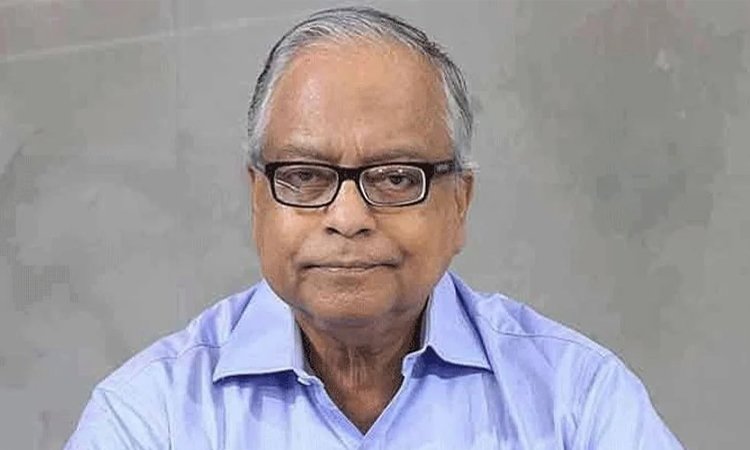
By SM Rashidul Islam
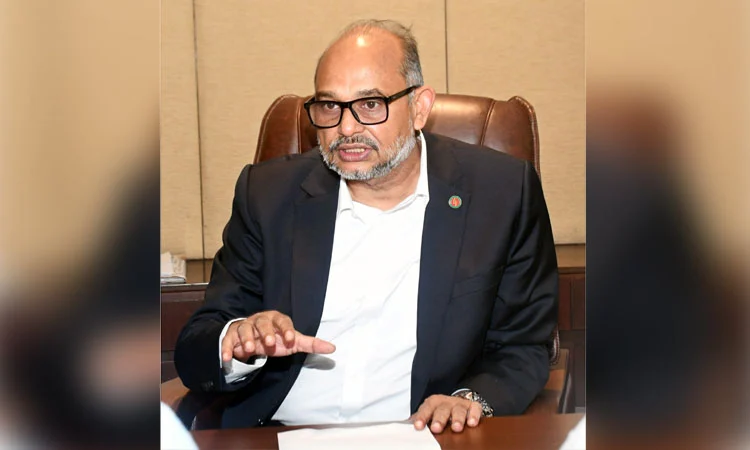
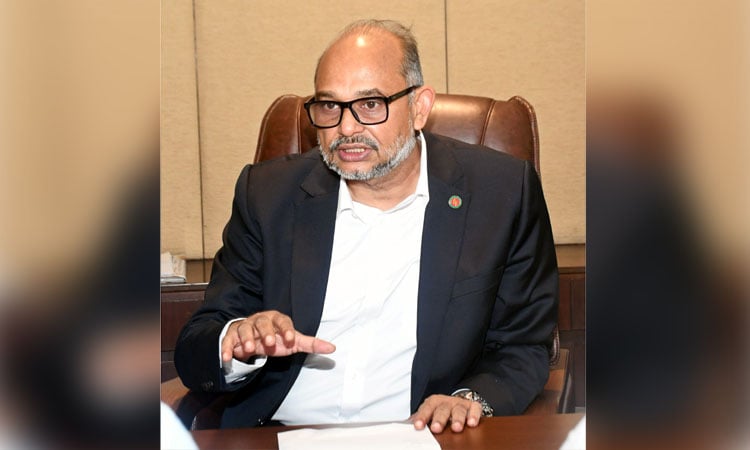
DHAKA, May 30, 2026 (BSS)- Political analyst and distinguished economist Prof Mahbub Ullah has described BNP founder and Shaheed President Ziaur Rahman as one of the leading nationalist leaders of the century, saying Zia played a pioneering role in rebuilding war-ravaged Bangladesh and placing the country on a strong economic and democratic foundation.
“He was not only a political leader, but also a visionary statesman and an architect of nation-building. From declaring independence to rebuilding war-ravaged Bangladesh, establishing multi-party democracy, and strengthening the foundations of agriculture and the economy, his contributions in every sphere were unique,” he told BSS in an interview marking the 45th martyrdom anniversary of martyred President Ziaur Rahman.
Ziaur Rahman was brutally killed by a group of bewildered army officers at the Chattogram Circuit House on May 30, 1981.
“With his death, Bangladesh seemed to have fallen silent. He was a leader who tried to build the Bangladeshi state with honesty, courage, intelligence, creativity and deep patriotism,” he said.
According to Prof Mahbub Ullah, nationalist leaders throughout history have often faced opposition from imperialist and hegemonic forces.
He said leaders such as Congo’s Patrice Lumumba, Algeria’s Ahmed Ben Bella, Indonesia’s Sukarno and Libya’s Muammar Gaddafi also became victims of conspiracies because nationalist leaders place the interests of their own countries above all else. Ziaur Rahman also fell victim to a similar conspiracy, he said.
Prof Mahbub Ullah said that before Ziaur Rahman’s martyrdom in 1981, various political campaigns had been orchestrated in the country with the aim to isolate him from the people and questioning his patriotism.
He said movements centering on the return of Jamaat-e-Islami leader Ghulam Azam to the country and the formation of an “Anti-Communalism Committee” at Dhaka University’s TSC were used in attempts to portray Ziaur Rahman as a patron of anti-liberation and communal forces.
He further said that at the same time, propaganda was secretly spread within the army claiming that Ziaur Rahman was giving priority to repatriated officers from Pakistan over freedom fighter officers.
“The main objective of the campaigns was to question his patriotism and his role in the Liberation War and create an environment for a coup against him,” he added.
Dr Mahbub Ullah said Ziaur Rahman had gone to Chattogram to resolve internal party conflicts. Although the then DGFI chief had warned him about the tour, he remained firm in his decision.
“Eventually, he became the victim of brutal assassination at the Chattogram Circuit House, causing an irreparable loss for Bangladesh,” he said.
Highlighting Ziaur Rahman’s contribution to the Liberation War, he said after the Pakistani military launched genocide on March 25, 1971, when the people of the country were shocked and directionless, Ziaur Rahman inspired the nation with new courage and confidence through his declaration of independence from the Kalurghat radio station.
“He was then a major and ordinary people did not know him. But through that declaration, he instantly became known in every household. People realised that the struggle had begun and that the country would one day become independent,” said Prof Mahbub Ullah.
According to him, history has rarely witnessed a nearly unknown military officer becoming the symbol of a nation’s hope and resistance during a crisis through a single declaration.
He said Ziaur Rahman led courageously throughout the nine-month Liberation War. After the war, he returned to military life, but during the political crisis of 1975, he once again had to stand before the nation.
Prof Mahbub Ullah said during the Sepoy-Janata uprising on November 7, 1975, soldiers accepted him as their leader because he was extremely popular among ordinary members of the armed forces.
He said many people at the time believed that Ziaur Rahman never bowed to foreign domination. Mentioning an incident, he said in August 1975, Ziaur Rahman deposited a revolver in the army treasury, symbolically sending a message to the nation that he was uncompromising on the issues of the country’s independence and sovereignty.
“After November 7, Ziaur Rahman emerged at the centre of national politics. But ultimately, his rise and nationalistic character made him a target of conspirators,” he added.
Talking to BSS, he also highlighted Ziaur Rahman’s economic contributions, saying, “Bangladesh’s current economy mainly stands on three pillars- agriculture, ready-made garments and remittances. And, Ziaur Rahman played an important role in strengthening the foundations of the three sectors.”
Mahbub Ullah said, after independence, Ziaur Rahman worked tirelessly to make Bangladesh’s agriculture self-reliant.
He undertook initiatives such as expanding irrigation facilities, supplying improved seeds and fertilisers, increasing cultivation intensity and organising farmers.
“He travelled from village to village, sat with farmers in their homes and listened to them. He believed that Bangladesh would survive only if the villages survived,” said Prof Mahbub Ullah.
He further said food production in the country has increased manifold while the production of vegetables, fruits, flowers and poultry has also grown significantly. This trend was initiated by Ziaur Rahman, he added.
Referring to Bangladesh’s ready-made garment industry, he said Ziaur Rahman arranged training for garment workers with the assistance of a South Korean company and facilitated the growth of the sector through industry-friendly policies.
“The policies he adopted to develop export-oriented industries were bold and timely. Today Bangladesh’s garment industry is one of the largest in the world,” he said.
Mentioning Ziaur Rahman’s contribution to remittance earnings, Prof Mahbub Ullah said he had created overseas employment opportunities for Bangladeshi workers by building strong relations with Middle Eastern and other countries.
“The huge role remittances now play in the country’s economy was also built on the foundation laid by Ziaur Rahman,” he added.
On democracy, he said despite being a military officer, Ziaur Rahman restored the democratic rights of the people.
“He could have remained a military ruler if he wanted. But he did not choose that path. He introduced multi-party democracy, held elections and encouraged political parties to participate in the electoral process,” he said.
According to Prof Mahbub Ullah, Ziaur Rahman was a statesman who never hesitated to take necessary decisions in the interest of the country.
“Statesmen are not like ordinary leaders. Their foresights, depth of thinking and firmness in decision-making are different. Ziaur Rahman was such a leader,” he observed.