Tuesday
01 September, 2026
News Flash
News Flash
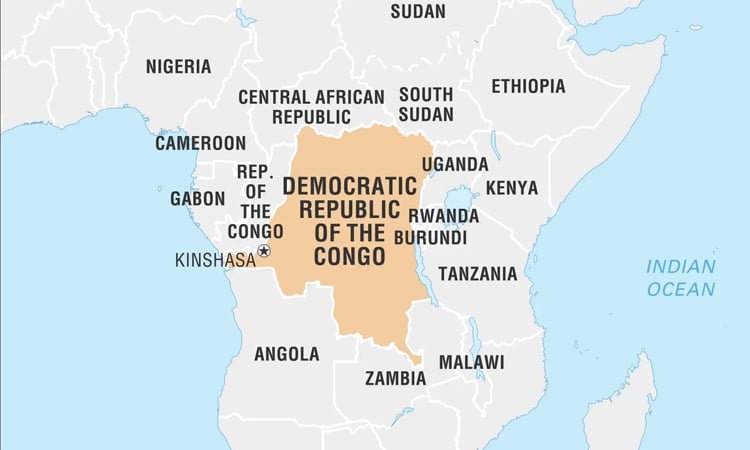
KINSHASA, Aug 7, 2026 (BSS/AFP) - The Democratic Republic of Congo's government said on Friday it will investigate the presence of uranium in its cobalt exports, following reports that the radioactive metal had made its way to China.
The announcement comes after an investigation published in late July in the Nature Communications journal, involving the Financial Times and Lighthouse Reports, alleged that Chinese companies had extracted and exported shipments of cobalt hydroxide containing significant quantities of uranium from the resource-rich central African country. The companies involved have denied the claims.
As one of the world's main sources of critical minerals, the DRC has been at the centre of a tug-of-war between China and the United States, with Washington vying to reduce its dependence on Beijing for the strategic resources.
Besides being the source of the uranium for the atomic bomb dropped on Hiroshima, the DRC supplies 68 percent of the world's cobalt and was Africa's largest producer of copper at 3.4 million tonnes in 2025. Aside from being at the source of many of the country's litany of long-running conflicts, the Congolese mining sector is widely renowned as riddled with corruption.
In a statement published on Friday, the Congolese authorities denied they had violated the DRC's international commitments, insisting that the radioactive metal's presence in the southeast's copper and cobalt veins was a "natural" and "well-documented" phenomenon.
The government insisted that "the study in question is not based on direct measurements carried out on exported shipments".
Alongside consultations with the International Atomic Energy Agency, the United Nations' nuclear watchdog, the authorities announced tests "to be conducted by both a national laboratory and an accredited international laboratory".
The vast majority of the DRC's cobalt is exported to China.
The Shinkolobwe mine in the southeast, which provided the uranium used to make the "Little Boy" bomb dropped by the US on Hiroshima at the end of World War II, has been closed for years.