Tuesday
04 August, 2026
News Flash
News Flash
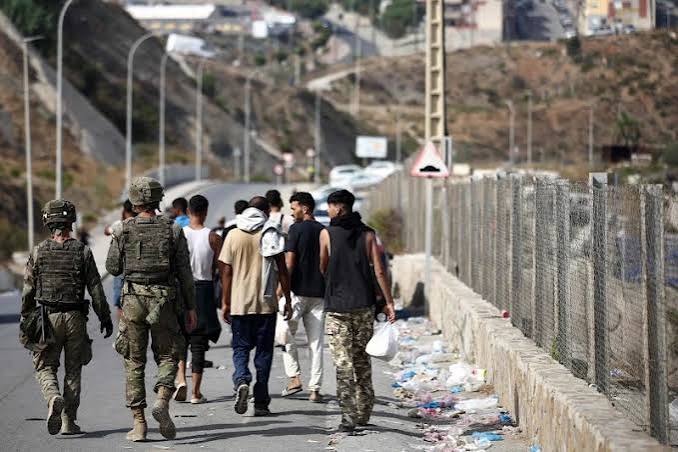
MADRID, Aug 4, 2026 (BSS/AFP) - Last week's deadly surge of irregular
migrants into Spain's north African territory of Ceuta did not "compromise"
Europe's visa-free Schengen travel zone, the Spanish interior minister said
on Tuesday.
Fernando Grande-Marlaska added that Spain had already returned to Morocco
70,000 of the 72,000 migrants who reached Ceuta, raising an earlier figure of
around 50,000 arrivals.
The unprecedented rush from July 30 claimed 75 lives, the Spanish
government's delegation in Ceuta said, raised from a previous toll of 72.
Many migrants drowned as they tried to swim around a barrier in the
Mediterranean Sea in scenes that sparked a diplomatic spat with Spain's EU
partners.
"It is clear that in no way was the Schengen area compromised in this
crisis," Marlaska told reporters in Madrid following emergency talks with EU
counterparts.
"We all agreed that the Schengen zone was never in the least danger," he
said, adding that "there was no possibility of any secondary movement" of
migrants from Ceuta to continental Europe.
Border passport checks are in force between Ceuta and mainland Spain.
The entry of the migrants sparked tensions with Spain's EU partners, with
Italy and Denmark calling for the country to be suspended from the bloc's
Schengen free-travel area.
Tuesday's meeting was therefore expected to be tense, but Marlaska said it
passed off "in an absolutely constructive tone".
Around 1,000 "unprotected" minors are among the migrants who remain in Ceuta,
according to Save the Children.
The Spanish government announced on Tuesday a package of 25 million euros
($29 million) to help the authorities in Ceuta provide unaccompanied minors
with emergency care.
Spain's Socialist Prime Minister Pedro Sanchez has defended a more open
approach to irregular immigration in contrast with tougher policies promoted
by European peers.
This year his government launched a scheme to grant legal status to irregular
migrants already living in Spain that is expected to benefit around 500,000
people, mostly Latin Americans.