Tuesday
25 August, 2026
News Flash
News Flash
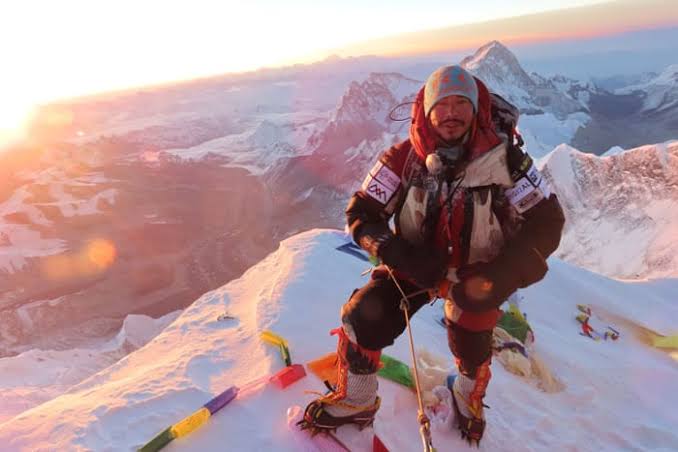
KATHMANDU, Nepal, Aug 1, 2026 (BSS/AFP) - Acclaimed British-Nepali climber
Nirmal Purja, a trailblazer who summited the world's tallest mountains, has
been confirmed dead in an avalanche on Pakistan's Broad Peak, his climbing
company said on Saturday.
Purja, 43, served with Britain's Brigade of Gurkhas and then the Special Boat
Squadron of the Royal Marines before becoming a full-time mountaineer and
guide.
He famously completed the summit of the 14 highest peaks in the world in just
over six months in 2019, shattering the previous record of seven years.
"It is with profound sadness and immense heartbreak that we confirm that
Nirmal Purja tragically lost his life following the avalanche on Broad Peak,"
Purja's company Elite Expeditions said in a social media post.
"We have also received confirmation that other members of the expedition
sadly did not survive."
The determined climber had the 14 mountains tattooed across his back,
complete with swirling clouds and Tibetan prayer flags.
His efforts were chronicled in a 2021 Netflix documentary, inspiring a new
wave of climbers.
However, Purja had also faced criticism for his use of guides, oxygen and
fixed ropes, as well as helicopters to go from one base camp to another.
Purja made history in 2021 with the first winter ascent of the treacherous
K2, the world's second-highest peak, along with a team of nine other Nepali
climbers.
He wrote on X this week that he was close to becoming the first person to
climb all 14 "super peaks" twice without oxygen.
"Broad Peak, I ask for nothing but safe passage up and back down," he wrote.
"My purpose has never been about me. It's about what I represent. It's about
showing YOU that your own mountains -- whatever they are -- are climbable."
Broad Peak, part of the Karakoram range in northern Pakistan, is the world's
12th-highest mountain and is regarded as one of the toughest and most
technical climbs of all the 8,000-metre-plus ascents.
- 'Everyone asks you about Everest' -
Born in a village in western Nepal, Purja joined the Gurkhas -- a brigade of
Nepalis in the British army famous for their fearlessness -- in his teens.
He later served in the elite special forces as an extreme cold weather
warfare specialist.
The adventurer told AFP in a 2019 interview that even a pair of flip-flops
was a luxury for him when he was a child.
Known by the nickname "Nimsdai", his love of mountaineering began on a trek
to an Everest base camp in 2012 when he summited the 6,119-metre (20,075-
foot) Lobuche.
He climbed his first "8,000er" in 2014. Two years later, when a period of
leave following a deployment to Afghanistan coincided with climbing season,
he made his first ascent of Everest.
"If you are from Nepal, everyone asks you about Everest. So I then used my
breaks for mountaineering," he said.
Next year he was back on the mountain, leading a successful Gurkha climbing
expedition and was made a member of the Order of the British Empire (MBE) for
his work in high-altitude mountaineering.
Later, he swapped his army boots for crampons, quitting the military after 16
years of service.
- Inspiration -
He then re-mortgaged his house to raise funds for his high-altitude, high-
speed quest of the 14 highest peaks.
Purja opened a mountain expedition company after his record-breaking feat,
taking climbers up the highest peaks across the world every season.
He became a much sought-after guide after the Netflix documentary gave him
global recognition.
Two women mountaineers accused Purja of sexual harassment and assault in
2024, which he denied.
In the 2019 interview with AFP, Purja said he hoped his feats would inspire
the next generation of Nepali climbers to break his records.
"As a Nepali, I hope my climbs put a spotlight on the talented climbers
here," he said.
Nepali guides, usually ethnic Sherpas from the valleys around Everest, are
the backbone of the country's lucrative climbing industry, but often do not
get as much recognition or accolades as international climbers.
Long relegated to supporting roles, Nepali climbers began gaining recognition
in their own right as Purja's global profile shone a spotlight on their
achievements.
Through his foundation, Purja funded education and mountain clean-ups. He
also built a porter's house on the Everest route to provide safe housing for
them.
Despite several records under his belt, Purja constantly sought new
adventures.
"There are always (new) boundaries," he told AFP.
"(That's) human, that's what we do."