Wednesday
29 July, 2026
News Flash
News Flash
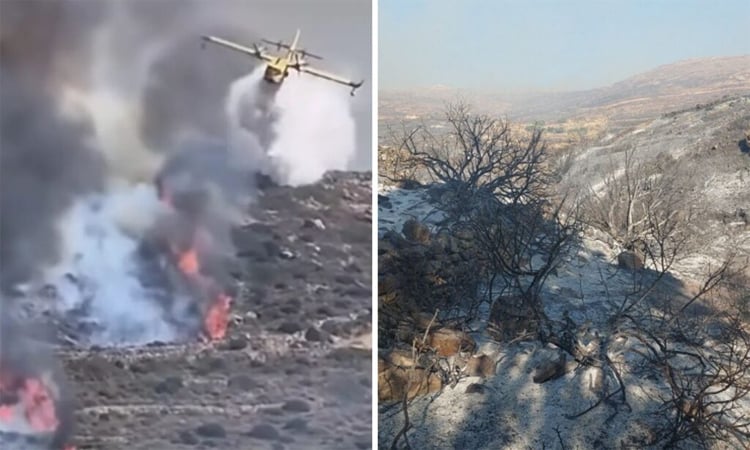
ATHENS, July 29, 2026 (BSS/AFP) - Firefighters were battling a wildfire on the Greek tourist island of Paros in the Aegean Sea on Wednesday after strong winds helped spread flames, prompting precautionary evacuations in several areas, authorities said.
The blaze broke out overnight at a landfill site in the western part of the island before spreading southward, burning brush and scrubland, according to Yannis Artopios, deputy spokesman for the Greek fire service.
"The fire started at a landfill site in the west and spread to the south of the island due to strong winds," Artopios told public broadcaster ERT.
Two aircraft and five helicopters were deployed alongside about 100 firefighters to contain the fire, he said.
Authorities ordered the precautionary evacuation of several areas after the flames spread overnight.
Local officials described the night as difficult but said conditions had improved by Wednesday morning.
"Today the fire is not as intense, although there are still scattered hot spots, and we must remain vigilant," said Vazeos Petropoulos, the local official responsible for Paros and the neighbouring island of Antiparos.
According to local authorities, around 10 villages were evacuated as a precaution, though it was not immediately clear how many residents and visitors had been forced to leave their homes.
Located in the Cyclades archipelago in the Aegean Sea, Paros is one of Greece's most popular tourist destinations, attracting large numbers of visitors each year alongside nearby Santorini.
Greece faces destructive wildfires almost every summer as prolonged drought, high temperatures and strong winds create ideal conditions for blazes to spread rapidly.
Dozens of other forest fires have broken out across the country in recent days, fuelled by strong winds. However, firefighters managed to bring them under control before they caused casualties or significant damage.
Until now, Greece had largely escaped the extreme heat and devastating wildfires that have affected several other European countries including Spain and France this summer.
Last week, a three-day heat wave pushed temperatures to as high as 43 degrees Celsius in some parts of the country.
According to Greece's meteorological service, it was only the third time since 2011 that temperatures have exceeded 40 degrees Celsius so late in the season, following similar events on July 20, 2015, and July 30, 2013.