Thursday
09 July, 2026
News Flash
News Flash
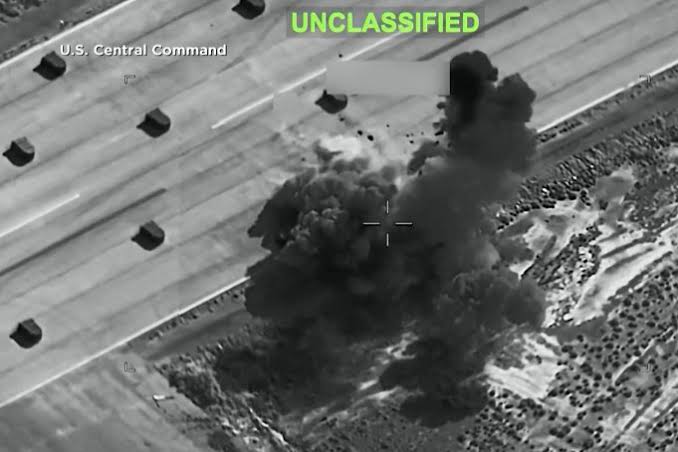
MASHHAD, Iran, July 9, 2026 (BSS/AFP) - The United States and Iran traded new
strikes on Thursday that killed several people in the Islamic republic as
Iranian authorities prepared for the burial of longtime supreme leader Ali
Khamenei.
Iran said it had resumed its attacks targeting US assets in Kuwait, Bahrain
and Qatar, with the renewed hostilities, sparked by tensions over the Strait
of Hormuz, threatening a return to full-scale war.
This was the second day in a row that the decades-old foes exchanged attacks,
with Iran's health ministry saying the US attacks across both days had killed
14 people and injured 78.
The fighting came with Iran preparing to bury Khamenei, who was killed
alongside close family members on the first day of the US-Israeli war against
the Islamic republic on February 28.
The last of a marathon six days of funeral ceremonies, the burial on Thursday
of Khamenei in his hometown, the eastern city of Mashhad, will be closely
watched for signs of his son Mojtaba Khamenei, who has yet to appear in
public since being appointed.
- 'Psychopathic' -
The Iranian foreign ministry said the US attacks targeted civilian
infrastructure, including railway bridges, and described the strikes as a
"gross war crime".
It called the US administration "evil and psychopathic" and accused it of
"obscenity, lies, and military aggression".
The latest strikes killed three people and wounded several others on the
outskirts of Ahvaz in Iran's southwest, the country's official news agency
IRNA reported, quoting an official.
US military officials said Thursday's strikes hit approximately 90 Iranian
military targets, including air defence systems, missile and drone storage
sites.
Iran's army said it had targeted a Patriot missile interceptor system in
Kuwait, an early warning system in Qatar and fuel tanks in Bahrain with
drones, as part of its attacks on US bases in the region.
Earlier, Iran's Revolutionary Guards said they had targeted US bases in
Kuwait and Bahrain.
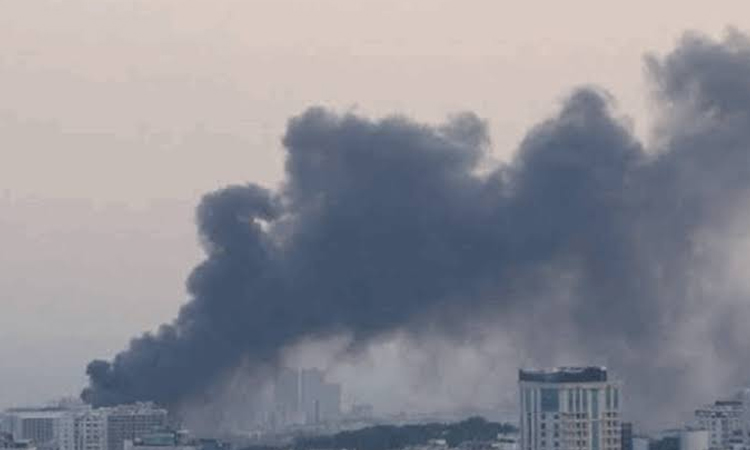
An AFP correspondent in the Bahraini capital Manama heard explosions late
Thursday morning as air-raid sirens were activated for a third time, hours
after Iranian attacks in the night.
- Fighter escort -
Iran's Guards accused the United States of an "effort to overshadow"
Khamenei's funeral with its attacks on the railway bridges, which led to the
suspension of rail services.
After five days of funeral ceremonies in Tehran, the clerical hub of Qom and
Iraq's holy cities of Najaf and Karbala, a plane carrying the coffin of
Khamenei landed in Mashhad on Thursday morning.
The farewells to Khamenei, who ruled Iran for over three-and-a-half decades,
have offered some insights into the shape of the new leadership who have
sought to put on a united front between political and military figures.
But there has so far been no sign of Mojtaba Khamenei who has communicated
only through written statements since being named and, according to
officials, was wounded in the February 28 air strikes.
In a sign of the security tensions, at least one fighter jet escorted the
plane carrying Khamenei's coffin to its final burial in Mashhad, footage from
the supreme leader's website showed.
- 'Incredibly fragile' -
After the foes traded attacks on Wednesday, US President Donald Trump said
the ceasefire with Iran was "over", but left the door open to more talks and
added any strikes would end quickly.
The Strait of Hormuz, a vital oil and gas corridor, remains a key point of
contention with Tehran insisting on control of the strait despite it being
open to free passage before US-Israeli attacks sparked the conflict in
February.
Late on Wednesday, while speaking to reporters aboard Air Force One, Trump
said the Iranian side had "called a little while ago," and that they wanted
"to make a deal so badly" while describing them as "sort of crazy".
Iran's chief negotiator Mohammad Bagher Ghalibaf said on Thursday that the
Strait of Hormuz would be opened only under "Iranian arrangements".
"The United States still has not learned that bullying and breaking its
promises no longer come without consequences," said on X. "Let me be clear:
If you strike, you will be struck."
The Iranian military struck at least three ships in recent days, prompting
extensive US strikes against Iranian targets on Tuesday.
Maritime traffic had tentatively resumed after Washington and Tehran signed
the deal to end hostilities last month.
The Memorandum of Understanding signed by Tehran and the US last month to end
the war "looks incredibly fragile" in the face of the "biggest shoot out"
between the two sides since the April ceasefire, said Ellie Geranmayeh of the
European Council on Foreign Relations (ECFR).
But "neither Tehran nor Washington have better options ahead besides the
diplomatic track paved by the MoU", she added.