Saturday
12 September, 2026
News Flash
News Flash
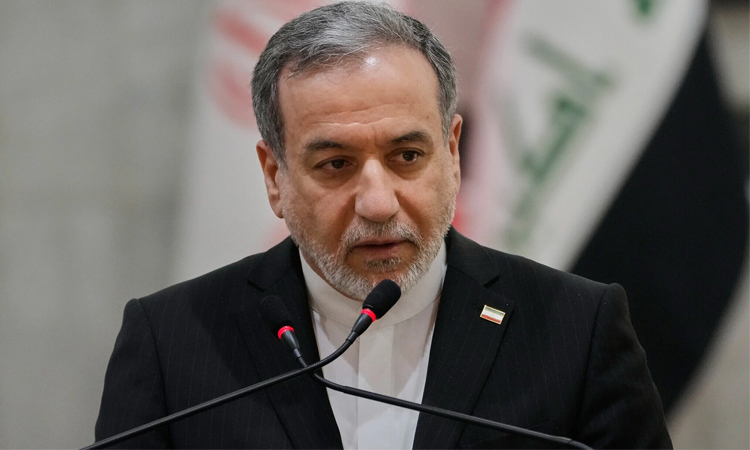
BAGHDAD, June 28, 2026 (BSS/AFP) - Iran's top diplomat warned Sunday that any
attempt to bypass the Strait of Hormuz routes agreed with the United States
would "increase tensions" in the Middle East, as the countries traded attacks
and accusations of violating a fragile ceasefire in the region.
During a visit to Iraqi capital Baghdad, Abbas Araghchi also called for the
establishment of a security framework with Gulf countries, with Tehran and
Washington accusing each other of violating the fragile truce that was meant
to end the Middle East war.
"Any attempt to adopt new or separate arrangements compared to what is
underway by the Islamic Republic of Iran, will only lead to more complicated
situations and delays in the reopening of the Strait of Hormuz, and will
increase the tensions, as we witnessed in the past two nights," Araghchi told
a press conference.
Vessels have continued to use a non-Iranian-approved passage in the strategic
waterway, tracking platforms showed Friday.
The Islamic Revolutionary Guard Corps (IRGC) said a day earlier that Oman and
the International Maritime Organization (IMO) announced the new corridor
without consulting Tehran, and warned vessels against using it.
Araghchi's warning came after the US military said it carried out new strikes
Saturday on multiple targets in Iran, in response to a fresh attack on a ship
transiting the Strait of Hormuz.
Tehran responded with launching strikes against US bases in the Gulf.
The recent clashes have tested the negotiating process meant to end a war
launched by the United States and Israel against Iran on February 28.
Araghchi called on all parties to "adhere to the memorandum of understanding
and not to allow this MoU to deviate from its course."
Iran's top diplomat said that "we should reach a new framework that includes
all countries in the region and without the presence or interference of any
country from outside the region."
He welcomed Iraq's call to hold a meeting between the Gulf States, Iran and
Iraq, which was drawn into the Middle East war from the beginning.
Iraq is expected to hold on July 8 funeral processions for Iran's late
supreme leader Ayatollah Ali Khamenei, who was killed during attacks by the
US and Israel on the first day of the war.
BSS/AFP/SSS/1636 hrs