Saturday
12 September, 2026
News Flash
News Flash
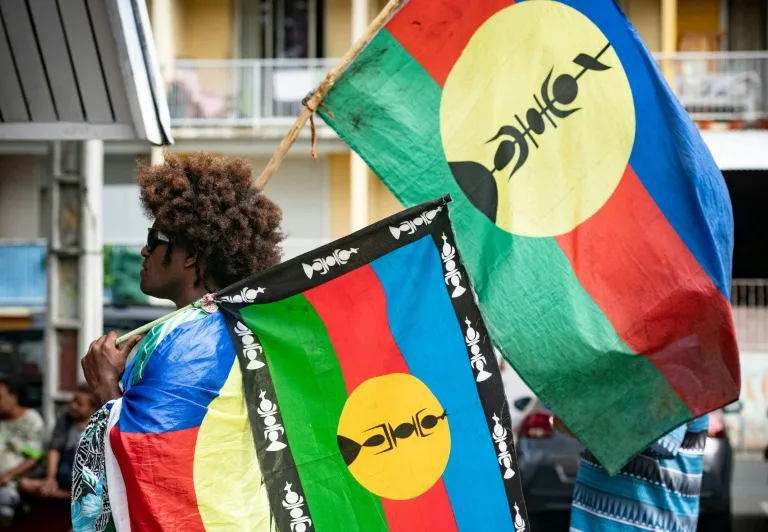
PARIS, France, June 26, 2026 (BSS/AFP) - Voters in the French overseas territory of New Caledonia will head to the polls on Sunday for the archipelago's first provincial elections since 2019, after the vote was delayed three times as talks over the territory's political future stalled.
Some 192,000 voters in New Caledonia will elect 76 provincial councillors on Sunday -- 40 in the South Province, 22 in the North Province and 14 in the Loyalty Islands.
Fifty-four of those elected will become members of the Pacific archipelago's Congress, the territory's main governing institution and the only body authorised to pass local laws.
Members of Congress will then elect up to 11 members to the executive branch known as the collegial government.
Sunday's vote, initially planned for 2024, will determine the balance of power in New Caledonia ahead of fresh negotiations with France on the territory's future status.
"The main political dynamic is over independence," said Denise Fisher, a visiting fellow at the Australian National University.
"Because they are two years overdue, the elections are vital to renewing the mandate, to renewing the legitimacy of representatives of the people for discussions going forward," she added.
Three referendums on independence held in 2018, 2020 and 2021 returned majorities in favour of remaining part of France, although pro-independence groups boycotted the third vote, which was held during the Covid pandemic.
The independence movement however retains strong support, particularly among the indigenous Melanesian Kanak population.
Efforts to forge a new agreement halted last year when the main pro-independence group rejected a deal with the government intended to bring stability to the overseas territory.
The so-called Bougival Accord would have created a Caledonian state and established a Caledonian nationality enshrined in the French constitution, but would have scrapped any future referendums on independence.
A landmark agreement signed in 1998 granted the archipelago greater autonomy but froze the electoral roll.
Since 2007, only those registered to vote before 1998, those who could prove 10 years' residence by that date and their descendants are eligible to vote.
Plans to extend voting rights to thousands of non-Indigenous long-term residents sparked deadly riots in 2024, when Sunday's vote had been scheduled to take place.
A law approved at the end of May added around 10,575 previously excluded "native-born" residents to the electoral roll, including more than 4,000 people with so-called "customary civil status", which denotes Kanaks.
The change increased the number of eligible voters from 169,000 in 2019 to around 192,000 for Sunday's poll.
Some parties bitterly opposed changes to the electoral roll they saw as having been unilaterally imposed by France, but there was a desire to hold Sunday's vote and allow negotiations to move forward, Fisher said.
Looming over Sunday's election is the race to replace France's centrist President Emmanuel Macron, Fisher said.
With less than a year until polls open in April 2027, Marine Le Pen's far-right National Rally party views next year's contest as its strongest opportunity yet to take power.
Le Pen has said "in no uncertain terms" that New Caledonia will remain part of France, Fisher said, while hard-left leader Jean-Luc Melenchon has suggested putting the question of independence to a referendum of the French people.
Some hardline opponents to the Bougival Accord could actually consider negotiating on it with the current administration "because the 2027 presidential elections are staring them in the face", Fisher said.
Party leaders may decide "it's better to work with the devil we know and come up with something," she added.