Saturday
12 September, 2026
News Flash
News Flash
SYDNEY, June 22, 2026 (BSS/AFP) - Australia is checking for any sign of "entrenched" H5 bird flu in its wildlife after detecting the country's first two cases, the government said Monday.
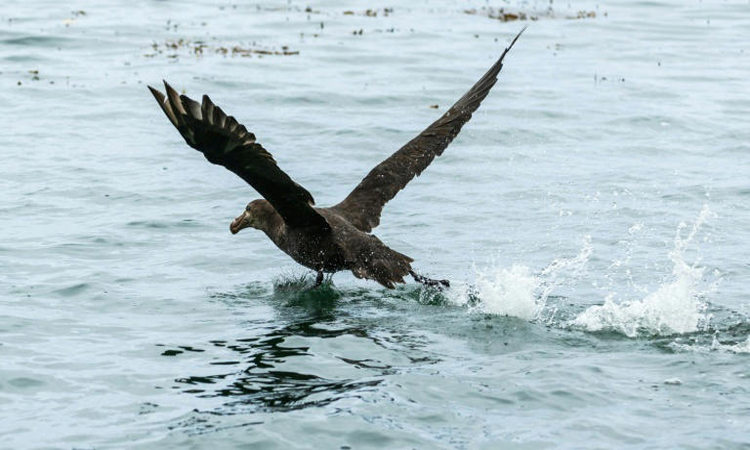
Scientists confirmed at the weekend they had found the disease in a migratory sea bird, a brown skua, in remote Western Australia.
Tests from another sick bird in the same area, a giant petrel, have now verified that it also had the H5 strain, officials said.
Over the next three to seven days, experts will investigate whether the virus strain has spread further by boosting surveillance and testing, said Agriculture Minister Julie Collins.
"We want to see whether or not there has been an entrenched infection in the wildlife in Australia," she told a news conference.
Australia was previously the only continent with no detections of the H5 strain, which can kill large numbers of poultry and wild birds.
The country's poultry and agricultural systems are free of H5 bird flu and there is no evidence of mass mortalities in wildlife, Collins said.
Experience in other countries showed the H5 virus was hard to eradicate from farms and could be "devastating" to wildlife, she said.
"Let me reiterate, at this stage we're talking about two birds on an isolated beach," the minister added.
"We have had those two confirmed. We are yet to establish whether or not it's entrenched in Australian wildlife."
Environment Minister Murray Watt said the variant's spread to Australia was disappointing but "not unexpected".
"We only have two confirmed cases but we don't underplay the threat that this poses to wildlife and our agriculture sector in Australia, should this become a wider outbreak."
The H5 strain has caused severe disease and high death rates in poultry and wild birds, and affected mammals across the globe.
The wild birds most affected by the H5 strain include waterfowl, shorebirds, seabirds and birds of prey.
Marine mammals have also been affected, with some detections in other animals such as cats, goats, alpacas and pigs.
There has been concern that the deadly disease could add to the extinction risks faced by Australian fauna, many of which are unique to the vast continent.
Almost half of Australia's wild bird species, and 83 percent of its mammals, are found nowhere else.
Scientists said last week the H5 bird flu strain had killed more than 13,000 elephant seal pups after infecting a breeding colony on the remote Heard and McDonald Islands, one of Australia's external territories in the sub-Antarctic.
BSS/AFP/MNH/1218HRS