Sunday
13 September, 2026
News Flash
News Flash
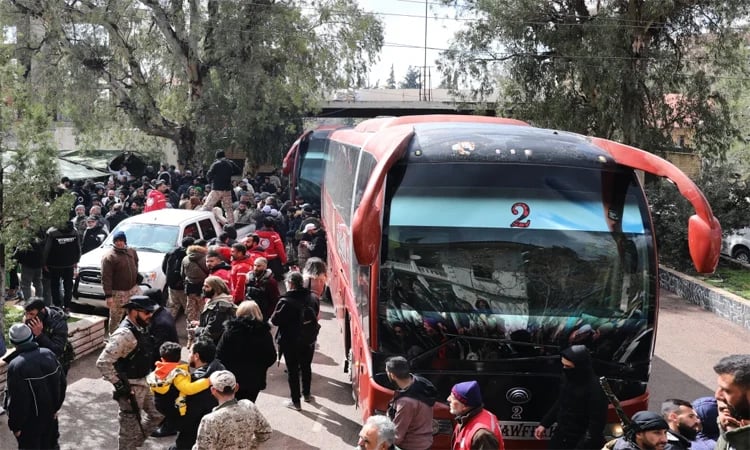
GENEVA, March 28, 2026 (BSS/AFP) - War crimes and crimes against humanity might have been committed when brutal violence tore through Syria's southern Sweida province last year, killing more than 1,700, UN investigators said Friday.
The United Nations Commission of Inquiry on Syria (COI)'s warning came in a fresh report focused on a week of bloodshed last July, ignited by clashes between fighters from the Druze minority and Sunni Bedouin.
The violence rapidly escalated and drew in government forces and fighters from other parts of Syria.
The COI said it had documented "widespread executions, torture, gender-based violence and the burning of homes" during the violence in the Syrian heartland of the Druze, who follow an esoteric religion that split from Shiite Islam centuries ago.
"Serious violations carried out by government forces and Druze armed groups may amount to war crimes," commissioner Fionnuala Ni Aolain said in a statement.
She warned that "the events also raise serious concerns that the attacks may have been part of a widespread and systematic attack against the civilian population of Sweida", urging "further measures by the government to investigate these events as comprising crimes against humanity".
Syria's foreign ministry in a statement expressed the authorities' readiness "to continue dialogue and cooperation" with the COI on the report.
The government is dealing with the findings on violations against civilians with the "utmost seriousness and responsibility", the statement said, emphasising "the government's firm commitment to hold all those involved to account... without exception".
- 'Murder, torture' -
The COI has been probing international law violations in Syria since the start of the long civil war that devastated the country from 2011 until the overthrow of president Bashar al-Assad in December 2024.
It detailed "three overlapping waves of violence" in Sweida between July 14 and 19 last year.
The violence killed more than 1,700 people and forced nearly 200,000 from their homes, it said.
A committee formed by the Syrian government said last week that it had documented the killing of 1,760 people in the violence.
The UN report, which drew on 409 first-hand accounts from survivors and witnesses, alongside field visits to the hardest-hit areas, said the first wave of violence on July 14-16 was the deadliest.
Government forces accompanied by tribal fighters had committed "widespread violations of international humanitarian and human rights law against Druze civilians", the commission statement said, listing "murder, torture, arbitrary detention and pillage".
Men identified as Druze were separated from women and children and "executed", it said.
During a second wave, beginning on July 17, government forces withdrew following Israeli airstrikes on Sweida and Damascus.
Meanwhile, Druze armed groups attacked Bedouin civilians, committing murder, torture, arbitrary detention and forced displacement, among other violations, the report found.
In the third wave, from July 17-19, tribal fighters targeted Druze civilians in retaliation.
"Nearly all homes, businesses and religious sites in up to 35 Druze-majority or mixed villages were burned and looted, and civilians were killed or abducted," the commission said, pointing out that members of government forces had removed their uniforms and joined the attacks.
- Accountability 'urgently needed' -
The COI also highlighted how Israel's strikes had not only killed and maimed people, but had contributed to instability, "fuelling accusations of treason against Druze community leaders, and prompting... retaliatory attacks against the entire community".
The commission warned that Sweida remained deeply divided, and that almost all of the nearly 200,000 people displaced last July remained unable to return home.
It also called on Israel and other external actors to halt actions that might further destabilise the situation.
"Expanded efforts to pursue accountability for all perpetrators, regardless of affiliation or rank, are urgently needed to rebuild trust among the victim communities, alongside genuine dialogue to resolve root causes," UN commission chair Paulo Pinheiro said.