Friday
07 August, 2026
News Flash
News Flash
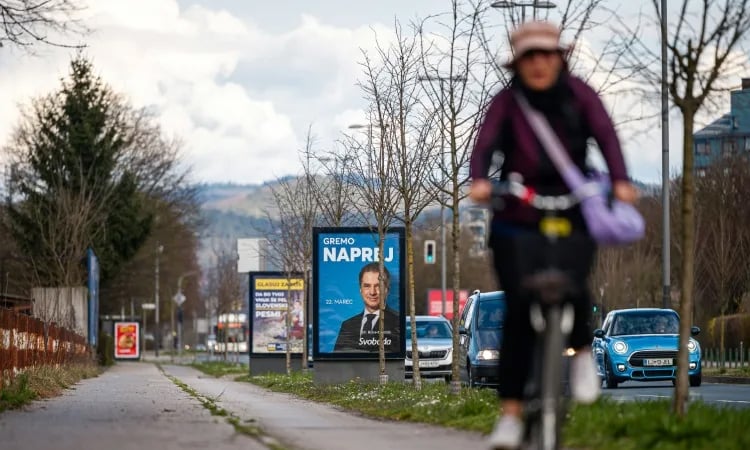
LJUBLJANA, March 16, 2026 (BSS/AFP) - Slovenia is heading into a tight parliamentary election next Sunday, with the conservative opposition hoping to regain power, which could see the EU country retake an illiberal turn.
The conservatives of veteran Janez Jansa have long been polling ahead of Prime Minister Robert Golob's liberals, but the gap has closed recently in the former Yugoslav nation of two million.
During his campaign, Jansa -- an admirer of US President Donald Trump and an ally of Hungarian Prime Minister Viktor Orban -- has pledged to restore "Slovenian values," such as the "traditional family," and "close the (state money) pipe" to NGOs deemed political parties.
During his third mandate as prime minister until 2022, the 67-year-old had frequent run-ins with the EU and drew mass protests at home, with critics accusing him of attacking media freedom and the judiciary and undermining the rule of law.
"If the right-wing bloc wins, this would mean the fall of another liberal stronghold in Europe, another nail in the liberal democracy's coffin," political commentator Aljaz Pengov Bitenc told AFP.
Far-right parties have made significant gains across Europe in recent years amid economic downturns and fears over Russia's invasion of Ukraine since 2022.
- 'God, homeland, family' -
Jansa is being seen as profiting from dissatisfaction with Golob's centre-left coalition over measures such as introducing a new contribution for the care of the elderly and frequently changing legislation and taxation for entrepreneurs and companies.
Golob has also been hit with accusations of abuse of power over the appointment of top police officials.
"This government has carried out Cuba-like experiments," Jansa told AFP on the sidelines of a recent rally in Celje, northeast of the capital Ljubljana, where hundreds of sympathisers gathered.
Jansa accuses Golob's government of behaving as if "money grew on trees".
Gaja Grcar, a 22-year-old student attending the Celje rally, said Golob's government, which legalised same sex marriage among legislative changes, "does not support our values, maybe even goes against them".
"God, homeland and family, those are the Slovenian values," Grcar told AFP.
- 'Gap closing' -
Attending ribbon cutting ceremonies at new health and infrastructure projects rather than rallies, Golob, 59, in an interview on public television urged citizens to "choose construction instead of destruction" and "the path that will ensure them a better future".
Jansa's Slovenian Democratic Party (SDS) has long been leading polls, but the gap has been closing in recent months, thanks to government measures such as the introduction of mandatory Christmas bonuses, and hikes in pensions and guaranteed minimum wages.
A poll published last week by daily Delo found SDS has 22.4 percent support, while Golob's Freedom Party (GS) has 20.3 percent support.
A survey published in daily Dnevnik over the weekend put GS ahead for the first time, with 24.1 percent support, and SDS with 23.2 percent.
"The gap between the challengers is closing," Ali Zerdin, a Delo editor, told reporters in a briefing on elections last week.
On the international front, Golob, a former power distribution company manager, has strongly criticised Russia's war against Ukraine -- like Jansa -- the US implementation of tariffs, its position on Greenland and its support for Israel's war in Gaza.
Golob, a political newcomer in 2022, topped the vote that year, propelled by anger over the Jansa government's crackdown on civil liberties.
Golob's party gained 34.5 percent of the vote against 23.6 percent for Jansa's faction.
"Everyone saw this (Golob's) government as a saviour, a messiah... and they inevitably ended up disappointed," analyst Pengov Bitenc said.