Sunday
14 June, 2026
News Flash
News Flash
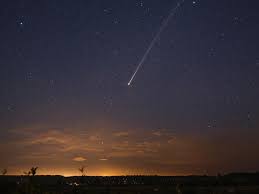
PARIS, France, March 10, 2026 (BSS/AFP) - The European Space Agency said it is investigating a fireball that streaked across the skies of Europe on the weekend before reportedly punching a football-sized hole in the roof of a German home.
The fireball, which glowed for around six seconds just before 7 pm central European time (1800 GMT) on Sunday, was observed by people across Belgium, France, Germany, Luxembourg and the Netherlands.
The fireball broke up into small meteorites, some of which reportedly struck at least one house in the German town of Koblenz, the ESA said in a statement late Monday.
A meteorite punched a hole around the size of a football into the roof of a home in the city's Guels district, according to the German public broadcaster DW.
No injuries were reported.
Some observers said they could hear the fireball's roar from the ground.
The ESA said its planetary defence team is analysing all the data collected about the object, which they believe was a few metres wide.
Objects around this size strike Earth somewhat regularly, from once every few weeks to once every few years, the agency explained.
"The timing and direction of the impact indicate that the object was likely not visible to any of the large-scale telescope sky surveys that scan the night sky for such objects," it added.
This is not unusual -- these kinds of objects flying in from space have only previously been spotted 11 times before entering Earth's atmosphere, the ESA said.
The fireball came days after the ESA announced that a massive asteroid would not smash into the Moon in 2032.
Last year, the asteroid 2024 YR4 -- which is big enough to level a city -- was briefly given a 3.1 percent chance of hitting Earth. This was the highest odds such a giant space rock has ever been given of striking our planet.
Further observations ruled out any threat to Earth, but there was still a four percent chance the asteroid could collide with the Moon.
A direct hit would have offered astronomers an unprecedented view of such an epic smash -- and could have blasted out meteors that threatened satellites around Earth.
But fresh data from the James Webb Space Telescope last week also confirmed it would miss the Moon, according to the ESA.