Sunday
14 June, 2026
News Flash
News Flash
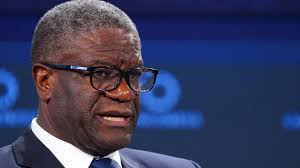
MUNICH, Germany, Feb 15, 2026 (BSS/AFP) - Nobel Prize-winning Congolese
doctor Denis Mukwege on Sunday cast doubt over the longevity of the latest
potential ceasefire in the Democratic Republic of Congo's eastern conflict
with the Rwanda-backed M23 militia.
While the Congolese government proposed freezing the frontlines on Friday as
a step towards a lasting halt to the fighting, the M23 replied by criticising
the DRC's "delaying tactics and attempts at manipulation".
"I think it risks looking like a truce, and we don't know how long this truce
will last. We have seen many ceasefires in the Democratic Republic of Congo
that have not lasted long," Mukwege told AFP in an interview on the sidelines
of the Munich security conference.
"We have had non-stop wars for 30 years, and each time there is a ceasefire,
the warring parties end up just breaking it," said the renowned
gynaecologist, who won the 2018 Nobel Peace Prize for his lifetime of
activism against the use of rape in wartime.
Half a dozen ceasefires have been brokered and broken in short order in the
DRC's resource-rich east, in the crosshairs of the M23 since the Rwanda-
backed armed group's resurgence in 2021.
After violence flared up following the M23's capture of the key cities of
Goma and Bukavu at the beginning of 2025, both the United States and Qatar
sought to bring the warring parties to the negotiating table.
While those efforts led to the signing of two separate agreements, neither
has succeeded in halting the fighting on the ground.
Critics have meanwhile accused the Congolese government of selling off the
country's vast mineral wealth to Washington as part of the peace process, an
allegation the DRC's mining minister denied on Wednesday.
"We have seen the limits of these ceasefires," said Mukwege, who has operated
on thousands of women subjected to the sexual violence that has been a
feature of the DRC's long-running conflicts.
"We hope that this one will be the right one, because in any case the
suffering of the Congolese people is enormous," he added.
Mukwege, a frequent critic of the government in Kinshasa, argued that the DRC
needs a "national dialogue" to resolve the corruption-riddled country's
"governance problem".
"Instead of taking short-term solutions, we really need to look at the issue
as a whole," he said.
"If the Congo is suffering today, it is simply because there is poor
governance. And so, if we had good governance, the Congo should normally be
able to protect its population and take charge of its minerals, which are
currently being exploited by all the vultures around the Democratic Republic
of Congo."