Monday
10 August, 2026
News Flash
News Flash
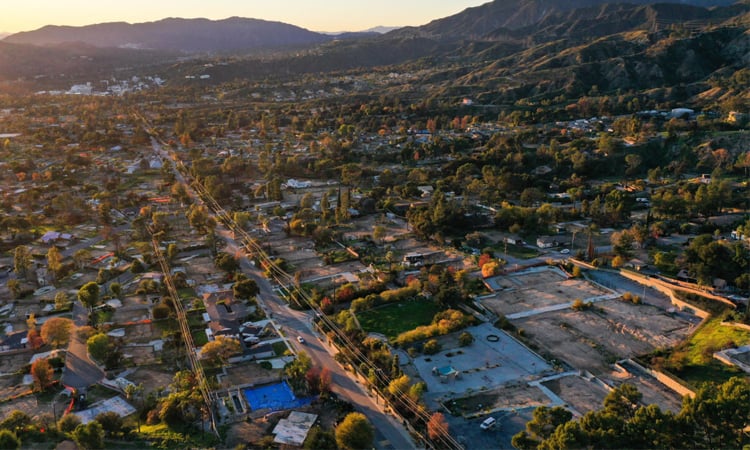
ALTADENA, United States, Jan 4, 2026 (BSS/AFP) - Less than a year after watching flames raze his home in the Altadena foothills, Ted Koerner has moved into a brand new house, one of the first to rebuild in this Los Angeles suburb.
It has been an uphill battle, and Koerner is visibly moved as he brings his dog, Daisy, back home. "We've been through a lot this year," he told AFP.
Altadena was hardest hit by the fires that ravaged parts of the sprawling US metropolis in January 2025. Thousands of homes were destroyed and 19 people died in the town -- compared to 12 killed in the upscale Pacific Palisades neighborhood.
To rebuild his home, Koerner, a 67-year-old head of a security company, had to front up several hundred thousand dollars as his mortgage lender refused to release insurance payouts for months.
Koerner also had to contend with the uncertainties created by the policies of US President Donald Trump.
Tariffs on steel, wood, and cement, all of which are often imported, have increased construction costs, and Latino construction workers fear arrest by Immigration and Customs Enforcement (ICE).
"If ICE grabs construction crews and Trump does that to us on top of tariffs, we'll never get this town rebuilt," Koerner said.
Slowly, however, Altadena is coming back to life. Amid the thousands of empty lots, a few frames are beginning to rise from the ground.
- 'Chaos and delays' -
The hurricane-strength 160 kilometer (100 mile) per hour gusts of wind that spread the fire at breakneck speed last January are still fresh in everyone's minds. But despite the destruction and the pervasive threat of climate change in California, dogged survivors refuse to move away.
"Where are you gonna go?" sighs another Altadena resident, Catherine Ridder, a 67-year-old psychotherapist. "There's no place around here that's not vulnerable to catastrophic weather."
Her construction project has begun and she hopes to move in by August -- before the $4,000 monthly rent she pays for a furnished apartment exhausts the housing allowance from her insurance.
To speed things up, the Californian bureaucracy has streamlined its processes. Los Angeles County is issuing building permits within a few months. Before, it often took more than a year.
But Ridder has been frustrated by delays in inspections to verify compliance with new building codes, such as requiring a fire sprinkler system in the roof.
"There's a lot of chaos and delays. I mean, maybe it's faster than pre-fire stuff, but this doesn't feel easy at all," she told AFP.
"I know that I'm way better off than a lot of people who were underinsured."
- Losing the 'melting pot' -
In this high-risk area, many residents were covered by the state's insurer of last resort, and their compensation is too meager to rebuild homes that often cost more than a million dollars.
So many are counting on the financial outcome of lawsuits filed against Southern California Edison, the company that owns the faulty power line suspected of having triggered the fire that destroyed Altadena.
Carol Momsen couldn't wait.
She was compensated only $300,000 for the destruction of her home, so the 76-year-old retiree sold her land. That paid for a new apartment elsewhere.
"Even if I had the money, I don't think I'd want to rebuild in Altadena, because it's just a sad place right now," the former saleswoman said.
There is palpable anxiety that this diverse town, home to a sizable African American population, will lose its soul because people cannot afford to rebuild.
Several empty lots display signs: "Altadena, not for sale!" and "Black homes matter."
Ellaird Bailey, 77, a retired technician at a telecommunications company, settled here with his wife in 1984 so his children could grow up in this "melting pot."
"So many of those people that we've known for 20 or 30 years are moving away" to more affordable communities, he said.
"It's hard to visualize what it's going to be like moving forward."