Tuesday
07 April, 2026
WASHINGTON, Oct 19, 2021 (BSS/AFP) - Zalmay Khalilzad, the veteran US envoy
whose months of patient hotel-ballroom diplomacy helped end the US war in
Afghanistan but failed to prevent a Taliban takeover, resigned on Monday.
In a letter to Secretary of State Antony Blinken, Khalilzad defended his
record but acknowledged that he came up short and said he wanted to step
aside during the "new phase of our Afghanistan policy."
"The political arrangement between the Afghan government and the Taliban
did not go forward as envisaged," he wrote.
"The reasons for this are too complex and I will share my thoughts in the
coming day and weeks."
Born in Afghanistan, the dapper 70-year-old academic turned US diplomat
took senior positions as part of the inner circle of former president George
W. Bush, becoming the US ambassador to Kabul and then Baghdad and the United
Nations.
As former president Donald Trump itched to end America's longest war in
Afghanistan, he brought back Khalilzad, who led exhaustive talks with the
Taliban -- without including the US-backed government in Kabul.
Those talks led to a February 2020 agreement in which US troops would leave
the following year.
But peace negotiations between the Taliban and the leadership in Kabul
failed to gain traction, and the government that the United States built over
20 years crumbled within days as US troops left.
- Rare US figure -
Steeped in Afghanistan's language and customs, Khalilzad was a rare US
diplomat able to develop a cordial rapport with Taliban leaders whose regime
was toppled by the United States after the September 11, 2001 attacks over
its welcome to Al-Qaeda.
Khalilzad, despite his Republican affiliation, was kept in place when
Democratic President Joe Biden defeated Trump and decided to go ahead with
the withdrawal.
Khalilzad soon became a lightning rod for criticism, with even his
superiors in the Biden administration -- while voicing respect for him
personally -- faulting the diplomacy behind the 2020 agreement.
Blinken said that Khalilzad's deputy, Thomas West, would take over as the
special envoy.
West is a longtime aide to Biden, serving on his staff when he was vice
president. West has worked for years on South Asia policy including on the
US-India civilian nuclear deal.
Shortly before Khalilzad's resignation became public, the State Department
said the United States would not be able to attend a new session called
Tuesday by Russia that also includes China and Pakistan, historically the
Taliban's primary backer.
- 'Time not on our side' -
After Trump ended US opposition to speaking to the Taliban, Khalilzad
engineered the release from a Pakistani jail of the group's co-founder Mullah
Baradar, seen as a figure who could deliver on promises, and spent months
with the largely rural rebels in a luxury hotel in the Qatari capital Doha.
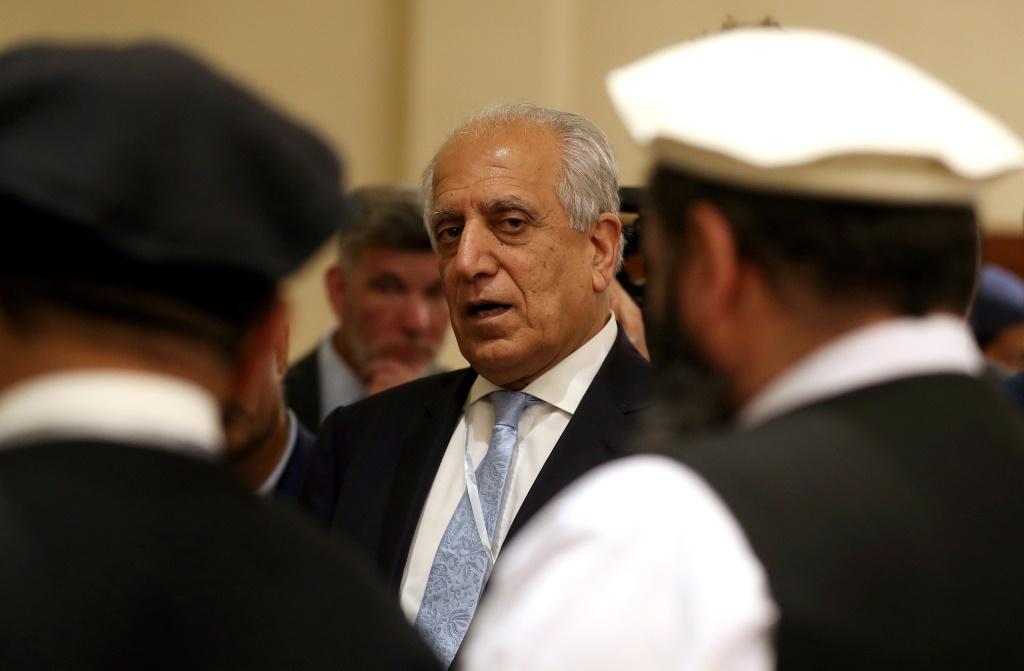
But pictures of him smiling with the Taliban earned him heated criticism in
Kabul where some in the now-fallen government as well as newly Western-
oriented elite berated him and accused him of selling out Afghanistan.
In interviews last month, Khalilzad said that he had reached a deal with
the Taliban in which the insurgents would stay out of Kabul and negotiate a
political transition.
But Khalilzad said the deal collapsed when president Ashraf Ghani fled the
country on August 15 and the Taliban saw a security vacuum.
Speaking to Foreign Policy, Khalilzad said that the Taliban fulfilled key
parts of the February 2020 agreement including not attacking the departing US
troops.
"I respect those who say we shouldn't have negotiated with the Talibs
without the government being there. But we don't know how much more fighting
would have taken for the Talibs to agree to that," he said.
But with no appetite in the United States for another surge of troops in
its longest war, "each year we were losing ground to the Talibs," he said.
"Time was not on our side."
Husain Haqqani, a former Pakistani ambassador to Washington who is now a
senior fellow at the Hudson Institute, said that Khalilzad failed in that he
"equated US withdrawal with peace."
"Khalilzad handed the keys of Kabul to the Taliban in return for promises
everyone knew the Taliban would not keep," Haqqani said.