Friday
11 September, 2026
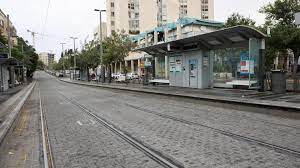
JERUSALEM, Oct 9, 2023 (BSS/AFP) - The usually bustling streets of
Jerusalem were eerily quiet on Monday as deadly fighting between Israel and
Palestinian militants raged for a third day in and around the Gaza Strip.
"Jerusalem is indeed a ghost town," said May Bahbah, a Palestinian resident
of Jerusalem in her 40s.
"People are in fear and worried," she told AFP, standing next to a
shuttered greengrocer.
Palestinians living in the city's Israeli-annexed east "have to go to their
jobs but they are worried they might be abused" by Israeli forces "because of
the war situation", said Bahbah.
Near Khan al-Zait, the Old City's main market, few shops had opened on
Monday.
Hazem, 42, who did not wish to disclose his full name, came from the
Palestinian neighbourhood of Silwan to run some errands and was visibly angry.
"The (Israeli) police officers asked me to get out of the car, and they
searched it and found an electrical outlet tester," he told AFP.
"One of them slapped me so hard, and when they wanted to attack me, an Arab
officer stopped them."
In the city's west, Israeli pensioner Sara, 70, was sitting on a bench
after her morning walk along the city's normally busy main roads that were now
almost deserted.
"I did not see many people in the streets, but it's natural, it's war!" she
said. "We are all worried... those who have someone in the army are very
anxious."
The atmosphere around the city "reminds me of 1973", when Arab armies
attacked Israel in a war that scarred the nation.
At the First Station commercial centre, which was full of people just days
ago during the Jewish holiday of Sukkot, businesses had ground to a halt, with
the vast majority of storefronts showing "closed" signs.
The school week has not started in either the city's east or west since
violence broke out early Saturday with a surprise attack by Hamas militants
targeting southern Israel.
Since then, some 700 people have been killed in Israel and 560 in the
blockaded Gaza Strip, according to official figures.
- 'Dying from the inside' -
Strong winds and rain on Monday have further dissuaded Jerusalemites from
leaving home.
"We feel like we are dying from the inside," said Itamar Taragan, manager
of the First Station compound, which he said would reopen "not tomorrow and not
after tomorrow".
Some "open their restaurants only to cook for soldiers, firefighters,
things like this", he told AFP.
"It's hard to breathe," said Taragan. "People are watching TV all day,
looking at... videos of the people who were abducted, and even if it's not your
children, you're in shock."
Pamela Auerbach and Jane Medved stepped out of one of the few open shops,
an organic supermarket, onto a "quiet" city, said Auerbach, 56, a lawyer who
splits her time between Israel and the United States.
She said she saw many young people offering help to families distressed by
the war.
For Medved, a 67-year-old university professor, "people are busy, that's
all. Busy working from home. Busy organising the help" for displaced or wounded
Israelis and soldiers.
Tourists can still be seen around the city but in smaller numbers. Several
of them interviewed by AFP were concerned they may not be able to leave the
country by air.
Jason Lyons, visiting from the United States, said videos he saw on social
media showing the horrors of the fighting were "very demoralising".
The 54-year-old, smoking a cigar in front of the five-star hotel he has
stayed at for several weeks, said he had felt a change in the mood on the
street.
His friend, 60-year-old Murray Huberfeld who works in finance in New York,
had a similar observation, but as he began speaking to AFP a rocket alert
blared through Jerusalem, sending the few people outside rushing into shelters.