Friday
01 May, 2026
JAKHAU, India, June 14, 2023 (BSS/AFP) - More than 100,000 people have
been evacuated from the path of a fierce cyclone heading towards India and
Pakistan, with forecasters warning Wednesday it could devastate homes and tear
down power lines.
Biparjoy, a cyclone whose name means "disaster" in Bengali, is making its
way across the Arabian Sea and is expected to make landfall as a "very severe
cyclonic storm" on Thursday evening, government weather monitors said.
Powerful winds, storm surges and lashing rains were forecast to hammer a
325-kilometre (200-mile) stretch of coast between Mandvi in India's Gujarat
state and Karachi in Pakistan.
India's Meteorological Department predicted the storm would hit near the
Indian port of Jakhau late Thursday, warning of "total destruction" of
traditional mud and straw thatched homes.
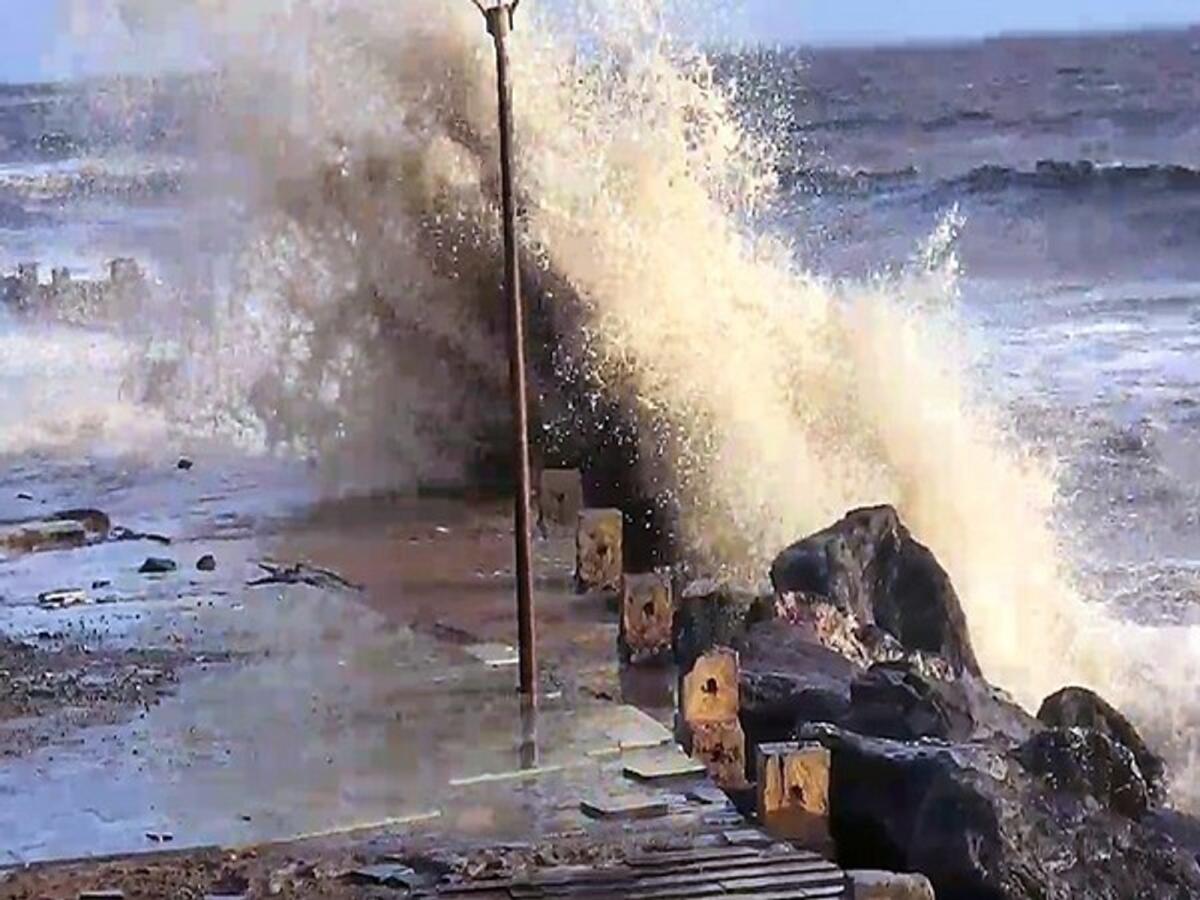
At the usually bustling Jakhau port, howling wind battered more than 30
large fishing boats dragged up out of the water onto the shore, as dozens of
stray dogs roamed around the port's entrance.
At sea, winds were already gusting at speeds up to 180 kilometres per hour
(112 miles per hour), forecasters said.
Wind speeds are predicted to reach 125-135 km/h, with gusts of up to 150
km/h, by the time it makes landfall.
"Over 47,000 people have been evacuated from coastal and low-lying areas to
shelter," said C.C. Patel, an official in charge of relief operations in
Gujarat.
India's meteorologists warned of the potential for "widespread damage",
including the destruction of crops, "bending or uprooting of power and
communication poles" and disruption of railways and roads.
- 'High to phenomenal' -
Pakistan's climate change minister Sherry Rehman said Wednesday that 62,000
people had been evacuated from the country's southeastern coast, with 75 relief
camps set up at schools and colleges.
She said fishermen had been warned to stay off the water and small aircraft
were grounded, while flooding was possible in the megacity of Karachi, home to
about 20 million people.
"We are following a policy of caution rather than wait and see," she told
reporters in Islamabad. "Our first priority is saving lives."
The Pakistan Meteorological Department forecast gusts of up to 140 km/h in
the southeastern province of Sindh, accompanied by a storm surge reaching 3.5
metres (11.5 feet).
Fishing has also been suspended along the Gujarat coast, with conditions
expected to escalate from "rough to very rough" on Wednesday, to "high to
phenomenal".
A short distance from Jakhau port, some 200 Kutch tribal people from nearby
Ashiravandh village sat on the floor at a single-storey local health centre
that had been converted into a cyclone shelter.
As night fell, men brewed tea on a kerosene stove in a corner while women,
all in traditional dress, rocked their babies to sleep in wooden cradles as
driving rain lashed the concrete walls of the centre.
Many were worried about their farm animals, which they had left behind.
Dhal Jetheeben Ladhaji, a pharmacist at the health centre, said 10 men had
stayed behind to look after hundreds of cattle crucial to their village's
livelihood.
"We are terrified, we don't know what will happen next," Ladhaji, 40, told
AFP.
"We are praying to God that the cyclone does not come, and that these
people who are staying in the shelter can go back to their homes with smiles on
their faces."
Five people have been killed in India, including two children who were
crushed when a wall collapsed, and a woman hit by a falling tree while riding a
motorbike.
Cyclones -- the equivalent of hurricanes in the North Atlantic or typhoons
in the Northwest Pacific -- are a regular and deadly menace on the coast of the
northern Indian Ocean, where tens of millions of people live.
Scientists have warned that storms are becoming more powerful as the world
gets warmer with climate change.
Roxy Mathew Koll, a climate scientist at the Indian Institute of Tropical
Meteorology, said cyclones derive their energy from warm waters, and that
surface temperatures in the Arabian Sea were 1.2 to 1.4 degrees Celsius warmer
than four decades ago.
"Rapid warming in the Arabian Sea, associated with global warming, tends to
enhance the heat flux from the ocean to the atmosphere and favour more intense
cyclones," Koll told AFP.