Wednesday
05 August, 2026
News Flash
News Flash
KHULNA, May 4, 2026 (BSS) - Administrator of Khulna City Corporation Nazrul
Islam Manju today said although water supply operations in the metropolis are
being managed by Khulna WASA, its services have yet to reach all areas,
particularly low-income settlements where residents continue to face an acute
shortage of safe drinking water.
"To address the crisis of safe drinking water, various initiatives are being
undertaken," he said while speaking as the chief guest at the inception
workshop on installation of wastewater treatment plants in low-income
communities of Khulna city.
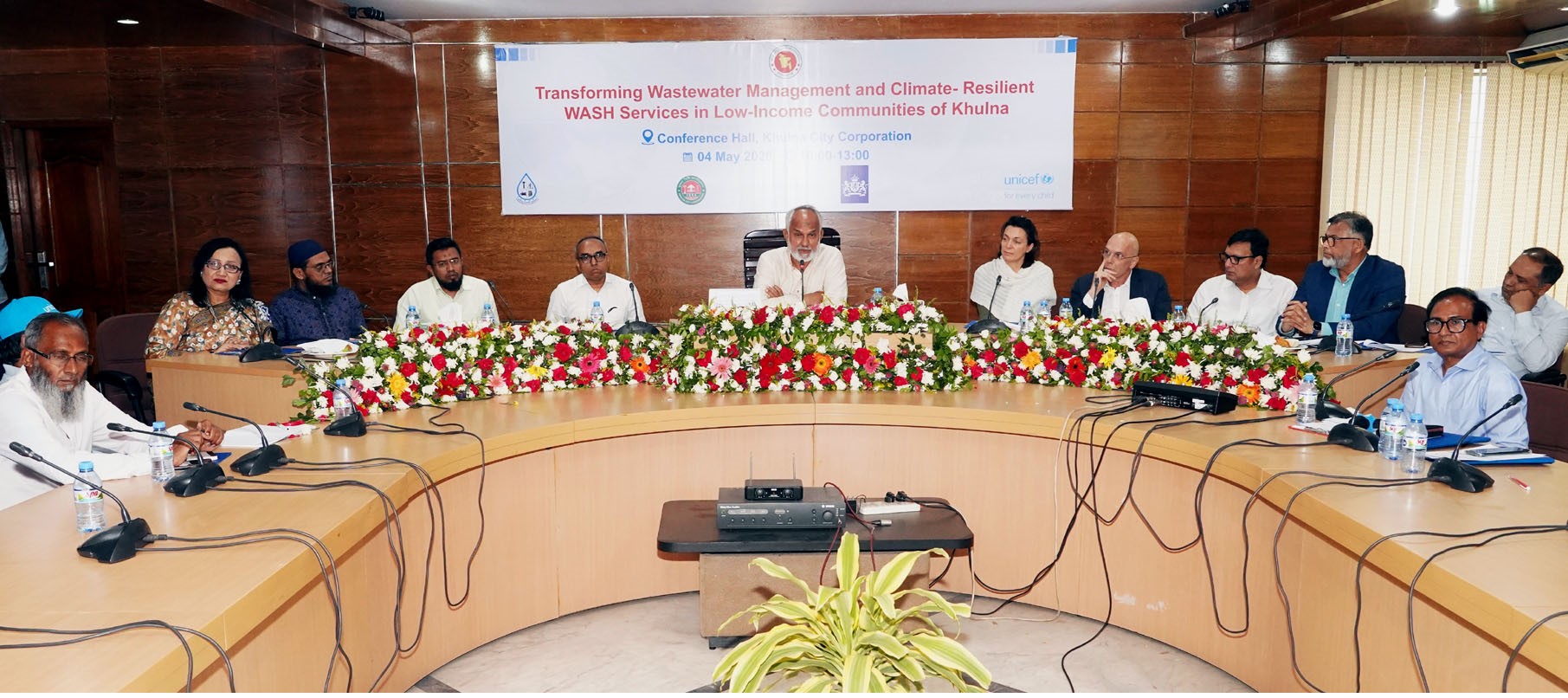
The workshop was held at Shaheed Altaf Auditorium of Nagar Bhaban under the
"Bangladesh Climate Resilient Sustainable Water Supply, Sanitation and
Hygiene" project being implemented by the Department of Public Health
Engineering with financial assistance from UNICEF.
The project aims to establish an inclusive citywide sanitation system and is
being implemented in the low-income areas of Bastuhara, Rupsha Char,
Greenland and Montur Colony in Khulna metropolis.
Addressing the function, the KCC administrator stressed the need for
establishing a water treatment plant centering the Mayur River, saying
sufferings of city dwellers would continue unless the river is protected.
He urged a Netherlands-based donor agency to support modernisation of the
Mayur River and transform it into a tourist attraction.
He also said KCC would work jointly with public and private hospitals and
clinics to further modernise medical waste management.
The meeting was informed that around 47 percent of human waste in the project
areas is being discharged into drains or surface water bodies due to
dysfunctional or abandoned shared toilets and lack of awareness among
residents.
It was also noted that inadequate sewerage facilities in the selected areas
have limited opportunities for proper disposal of human and other waste,
while severe space constraints are creating serious health risks.
Under the project, climate-resilient sanitation systems and effective waste
treatment and disposal mechanisms will be introduced on a priority basis for
vulnerable communities to ensure 100 percent safe sanitation, reduce
environmental pollution and protect public health and water bodies.
Initially, 10 additional water treatment plants will be installed in the
project areas. Support will also be provided to strengthen KCC's capacity for
operating and maintaining water treatment plants and medical waste management
systems, alongside establishment and operation of a child welfare centre.
Two water treatment plants have already been constructed in the Bastuhara
area under the project. Treated water supplied by Khulna WASA is being
distributed safely to residents. Consumers are able to collect water using
prepaid cards or through ATM booth operators at a cost of 60 paisa per litre.
Chief Executive Officer of KCC Rajib Ahmed chaired the workshop.
First Secretary of the Embassy of the Netherlands Igne Kassen and Deputy
Country Director of UNICEF Peter Maas addressed the event as special guests.
Among others, Managing Director of Khulna WASA Muhammad Kamruzzaman, Director
of Health Dr Md Mujibur Rahman, Managing Director of Gazi Medical College Dr
Gazi Mizanur Rahman, Professor of Environmental Science Discipline at Khulna
University Dr Nazia Hasan, Superintendent of Khulna Medical College Hospital
Dr Md Akhteruzzaman, Civil Surgeon Dr Mosammat Mahfuza Khanam and officials
from different government and non-government organisations attended the
workshop.