Friday
21 August, 2026
News Flash
News Flash
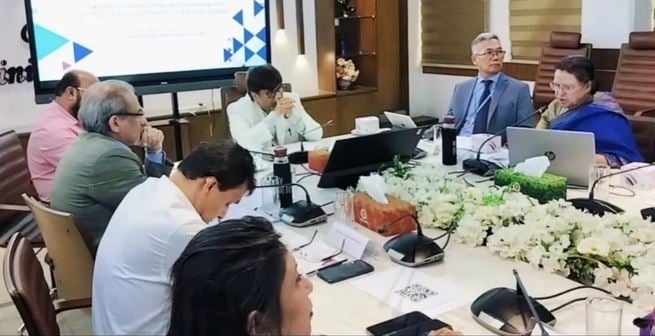
DHAKA, July 30, 2026 (BSS) - Stakeholders and policymakers today called for reducing regulatory complexities and creating a more business-friendly environment to accelerate the formalization and growth of Micro, Small and Medium Enterprises (MSMEs) in Bangladesh.
They stressed the need to simplify licensing and approval procedures to make it easier to start and operate businesses at a national consultation titled "Simplifying Regulatory Processes and Conducive Environment for Formalization", jointly organized by the Ministry of Industries, Business Initiative Leading Development (BUILD) and the International Labour Organization (ILO) at the ministry's conference room.
Speaking as the chief guest, Industries Secretary Abdun Naser Khan said simplifying regulatory processes would accelerate business formalization.
He said a high-level committee, headed by the Minister to the Ministries of Industries, Textiles and Jute and Commerce, has been formed to address the issue.
He added that the government is preparing a 90-day Deregulation Action Plan and working with the Prime Minister's Office to strengthen the One-Stop Service (OSS) system.
BUILD Chairperson Abul Kasem Khan said the newly published Business Licensing Guidebook would help entrepreneurs access information on required licenses and approvals more easily.
He also proposed integrated utility connections, a joint inspection system and legally backed Service Level Agreements (SLAs). To achieve the government's target of generating one million jobs, he said regulatory barriers must be removed to facilitate the emergence of at least 100,000 new entrepreneurs.
Presenting the keynote paper, BUILD CEO Ferdaus Ara Begum said excessive regulatory requirements significantly increase the time and cost of doing business. Quoting Bangladesh Bureau of Statistics (BBS) data, she said 65 percent of the country's economic units remain informal, although registered businesses account for more than half of total employment.
She said businesses in the plastic waste management sector require up to 31 licenses, more than 235 documents and around 650 days to complete regulatory procedures, while light engineering enterprises need 30 licenses, over 200 documents and nearly 600 days.
To ease the burden, she proposed introducing a Single Digital Business Identity number, a one-stop licensing platform and long-term licenses, estimating that such reforms could reduce compliance costs by 30 to 50 percent.
ILO Representative Peter Junior Belen said around eight out of every 10 workers in Bangladesh are employed in the informal sector.
He said expanding formal and decent employment is essential to address post-LDC challenges and reaffirmed the ILO's commitment to providing technical support.
Representatives from the Registrar of Joint Stock Companies and Firms (RJSC), SME Foundation and several ministries also called for simplifying trade licensing, creating a centralized database, improving access to SME financing and addressing tax and audit complexities faced by women entrepreneurs.
Representatives from government agencies, business chambers, labour organizations and development partners attended the consultation.