Tuesday
30 June, 2026
News Flash
News Flash
PARIS, France, March 31, 2026 (BSS/AFP) - Here are the latest economic events in the Middle East war:
- Oil prices rise -
Oil prices rose Monday as the Middle East crisis escalated with the entry of Yemen's Houthi rebels into the Iran war and as US President Donald Trump threatened to destroy Iran's main export terminal.
European stocks rose but Wall Street's major indexes closed mostly lower as markets cast a wary eye on Trump's comments about negotiations to end the fighting.
Brent North Sea crude, the international benchmark, closed at $112.78 while West Texas Intermediate gained 3.3 percent to $102.88 a barrel, closing above $100 for the first time since the war started.
- Iran parliament body approves Hormuz tolls -
Iranian state media reported Monday that a parliamentary commission had approved plans to impose tolls on vessels transiting the Strait of Hormuz, a waterway vital to oil and gas shipments that has been effectively closed due to the Middle East war.
Citing a member of the parliament's security commission, state TV said the plan involved among other things "financial arrangements and rial toll systems" and "implementing the sovereign role of Iran", as well as cooperation with Oman on the other side of the Strait.
- Dubai announces financial aid -
Dubai will provide support worth over $270 million to help businesses and families, authorities announced Monday, as Gulf states face economic disruption from Iran's aerial attacks and closure of the Strait of Hormuz.
- Panama Canal sees traffic increase -
The war in the Middle East has prompted a surge in ships utilizing the Panama Canal, an executive for the waterway said Monday.
"We had expected around 34 daily passages" for this year, but in the last two weeks "we've been having 38, 39, 40," the deputy administrator of the canal, Ilya Espino de Marotta, told Telemetro in an interview.
- Haifa refinery fire -
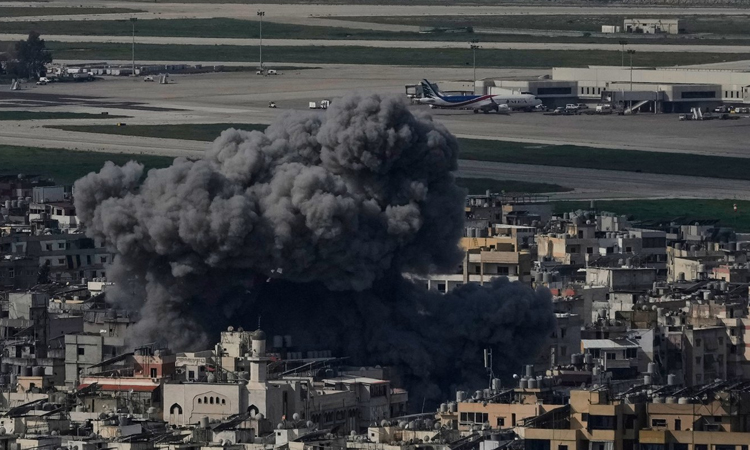
A large blaze ignited at Israel's Haifa oil refinery after it was hit by debris from the interception of a projectile Monday.
Television channels showed black smoke billowing into the sky from the site, while the fire service shared photos of a tank on fire, shortly after the Israeli military said it had detected new missiles from Iran.
- Sri Lanka raises electricity prices 40% -
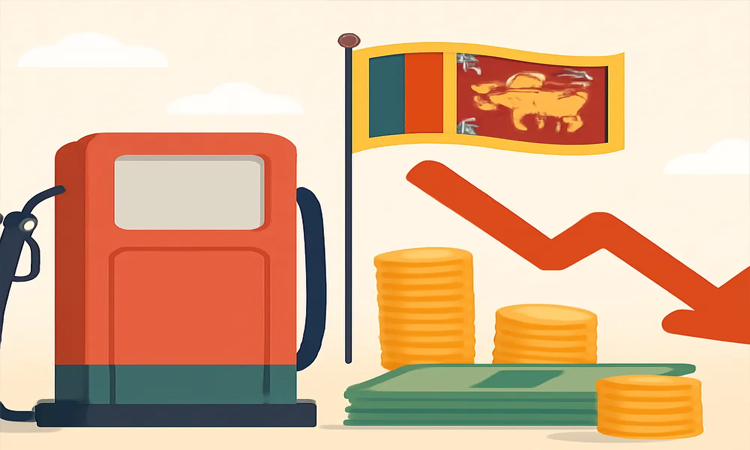
Sri Lanka announced a nearly 40 percent increase in electricity prices from Wednesday as it battles an energy shortage caused by the war in the Middle East.
Sri Lanka has raised fuel prices three times this month, increasing them by more than a third, and has imposed a four-day working week in a bid to save energy.
- Norway cuts fuel taxes -
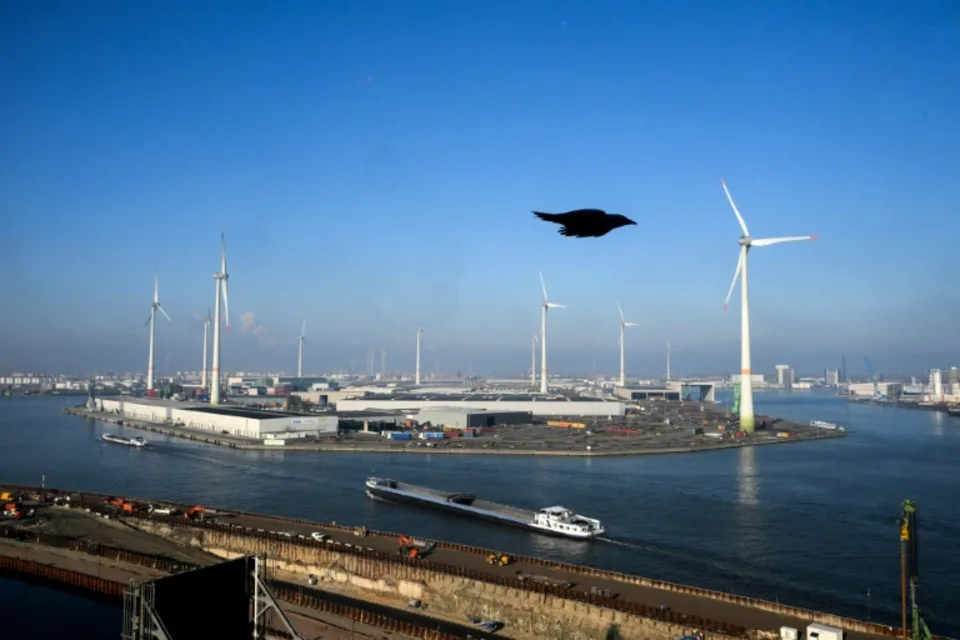
Norway will temporarily cut its taxes on petrol and diesel to counter rising prices as the Middle East war disrupts global energy supplies, the government said.
- G7 pledges 'necessary measures' -
G7 economy and finance ministers said Monday that they stood ready to take "all necessary measures" to ensure the stability of the energy market as they tackled the economic consequences of war in the Middle East.
- Bangladesh orders energy saving -
Bangladesh has ordered civil servants to switch off lights and turn down air conditioning to save power as the Middle East war worsens an energy crunch, officials said.
- Gulf energy targets -
Kuwait said an Iranian attack on a desalination and electricity plant killed one worker and damaged a building as Tehran pressed its aerial campaign against its Gulf neighbours.
- Iranian grid 'stable' -
Iran has restored electricity in parts of Tehran and nearby areas after strikes damaged power grids and briefly disrupted supply, deputy energy minister Mostafa Rajabi-Mashhadi told state television.
- Indian rupee hits fresh record low -
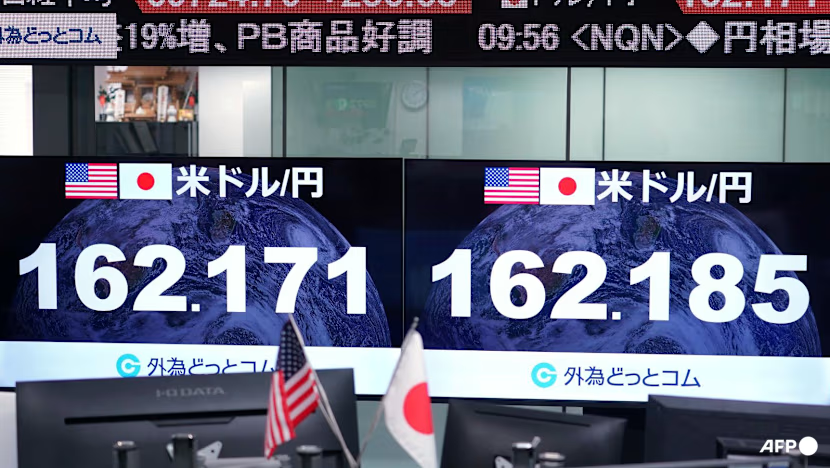
India's rupee fell to a record low of more than 95 to the dollar on Monday, before recovering, despite recent efforts by the central bank to stem its fall.