Wednesday
22 July, 2026
News Flash
News Flash
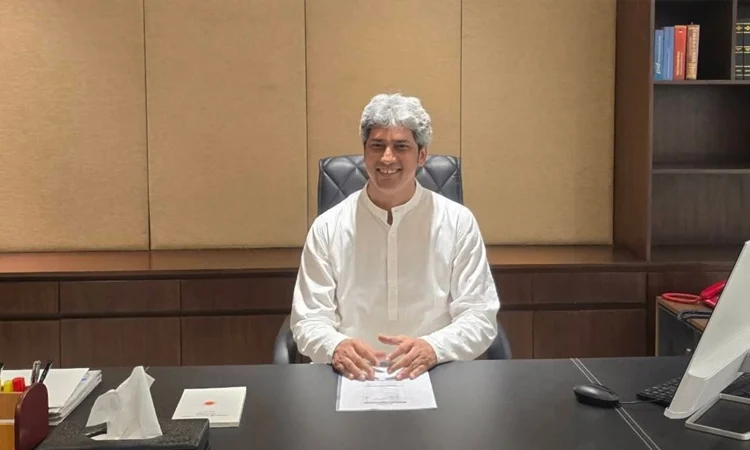
DHAKA, Mar 9, 2026 (BSS) – State Minister for Planning Zonayed Abdur Rahim Saki, MP, today said that the government is working on appropriate policies to implement the financial commitments outlined in the election manifesto of the newly elected government.
He also mentioned that the government is well aware of the ongoing crisis in the Middle East and is closely monitoring the situation. “We’re also outlining necessary measures to address its potential impacts,” he added.
The State Minister was addressing a seminar virtually as the chief guest on “Bi-annual Economic State & Future Outlook of Bangladesh Economy-Private Sector Perspective” held at DCCI in the capital today.
Dr. Monzur Hossain, Member (Secretary), General Economics Division, Bangladesh Planning Commission, A.H.M. Jahangir, Additional Secretary & Project Director, Support to Sustainable Graduation Project (SSGP) and Dr. Mohammad Akhtar Hossain, Chief Economist, Bangladesh Bank also spoke as special guests.
Highlighting that democratization of the economy as one of the government’s key priorities, Saki emphasized ensuring that the benefits of development reach to every citizen.
Saki also noted that the government will prioritize employment generation, environmental protection and the development of a skilled workforce. He further mentioned that although there is significant scope to expand the tax net, sufficient attention has not been given in this regard, resulting in greater dependence on domestic and external borrowings.
Dr. Monzur Hossain, Member (Secretary), General Economics Division (GED), Bangladesh Planning Commission said that the new government is working to support initiatives aimed at building a society free from income inequality.
He said that to achieve the target of transforming Bangladesh into a $1 trillion economy by 2030, at first the country needs to restore economic stability. In this regard, manufacture based sectors should receive priority and alternative financing mechanisms beyond the banking system should be introduced to ensure financing for SMEs.
A.H.M. Jahangir, Additional Secretary & Project Director, Support to Sustainable Graduation Project (SSGP) mentioned that as a Least Developed Country, Bangladesh has long benefited from duty-free trade privileges.
Although the country was scheduled to graduate from LDC status this year, recently an application was submitted to defer the graduation timeline by three years. He also expressed optimism about receiving a positive response.
Dr. Mohammad Akhtar Hossain, Chief Economist, Bangladesh Bank, said that inflation currently stands at around 9%, and the recent Middle East crisis could create further economic instability. In such a situation, Bangladesh Bank may need to adopt contractionary monetary policies to control inflation. He warned that excessive liquidity in the market and lower interest rates could create instability in the economy.
Dr. Zaidi Sattar, Chairman, Policy Research Institute of Bangladesh (PRI) emphasized the need to reduce excessive dependence on tariffs and suggested that protection for domestic industries should be time-bound and rational. He also stressed the need for comprehensive reform of the tax structure and bringing the entire process under digital systems.
Dr. A K Enamul Haque, Director General, Bangladesh Institute of Development Studies (BIDS) said that agriculture is increasingly becoming commercialized, and since rice cultivation is becoming less profitable, farmers are losing interest, which could reduce rice production in the future. He also noted weaknesses in supply chain management that needs to be addressed.
Dr. Mohammad Abu Eusuf, Executive Director, RAPID, stressed the need to accept the reality and take necessary corrective initiatives. He highlighted the importance of restoring business confidence and strengthening the confidence of bank depositors. To tackle inflation, he emphasized coordinated efforts through fiscal policy, monetary policy and market management.
Faisal Samad, Director, BGMEA & Managing Director of Surma Garments Ltd. said that the RMG sector is one of the key drivers of Bangladesh’s economy, moving from the 8th largest exporter in 2006 to the 2nd position globally at present. However, he warned that Bangladesh’s market in the United States and the EU remains vulnerable due to the absence of Free Trade Agreements (FTAs) with those regions, and urgent initiatives are needed in this regard.
Professor Dr. M. Niaz Asadullah emphasized the need for innovative policies to reduce the cost of doing business and ensure their effective implementation.
In his keynote presentation, DCCI President Taskeen Ahmed highlighted various issues including global economic instability due to conflicts in the Middle East, LDC graduation, monetary policy, inflation, private and foreign investment, international trade, agriculture, industry and manufacturing sector, CMSMEs, energy and power, logistics infrastructure and the financial sector.
During the open floor discussion session, former Director A.K.D. Khayer Mohammad Khan and other participants shared their views.
DCCI Senior Vice President Razeev H Chodhury, Vice President Md. Salem Sulaiman and members of the Board of Directors, along with representatives from the government and private sectors were also present on the occasion.