Tuesday
25 August, 2026
News Flash
News Flash
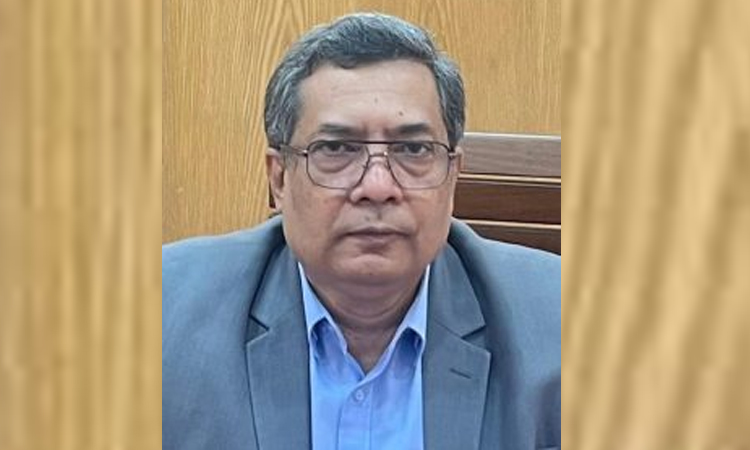
DHAKA, Feb 18, 2026 (BSS) – Country’s eminent economist and Member of the General Economics Division (GED) of the Planning Commission Dr Monzur Hossain has pinned high hope on the new government, led by Prime Minister Tarique Rahman, to propel the economy prudently through ensuring macroeconomic stability.
“I extend my heartfelt congratulations to the members of the new cabinet while all the members of this fresh cabinet are experienced and hopefully they will play a proactive role in the country’s democratic transition,” he said.
Bangladesh Nationalist Party (BNP) Chairman Tarique Rahman, elder son of Shaheed President Ziaur Rahman and late Prime Minister Begum Khaleda Zia, formed the government with a 49-member cabinet as he took oath as the prime minister for his first time.
The cabinet members include 25 ministers and 24 state ministers.
President Mohammed Shahabuddin administered the oath of office and oath of secrecy to Tarique Rahman and his new ministers at the open space of the South Plaza of the Jatiya Sangsad Complex.
Talking to BSS, the GED member said that BNP Standing Committee member Amir Khasru Mahmud Chowdhury and coordinator of Ganosanhati Andolon Jonayed Saki have been given the charge of the Ministry of Finance and the Ministry of Planning as the Minister and State Minister respectively. Besides, the Ministries of Commerce and the Industries are also in safe hands.
“Through their experiences, witty and political wisdom, they will play an effective role in economic planning and development of the country,” he hoped.
Highlighting the priorities and challenges before the new government, Dr Monzur said that the fresh government should put emphasis on three key issues -- attracting more investment, generating more employments and reining in inflation –- to make a solid foundation for the economy.
“Through this political transition, I’m hopeful that confidence will be restored among both the local and foreign investors and they will come up in a big way in the coming days,” he added.
Dr Monzur opined that the government would also have to keep due importance on keeping the macroeconomic stability, boosting further the foreign exchange reserve, keeping stable the exchange rate.
Referring to the BNP Chairman and Prime Minister Tarique Rahman’s plan to roll out ‘Family Card’, he noted that this would be a ‘unique’ initiative and also an ‘epoch-making’ step towards universal social protection benefitting all sections of people especially the marginalized ones.
Through such initiative, he said that the leakages which prevailed earlier in the various social safety nets would be eliminated and thus would turn the country in to a welfare-oriented state in true sense.
When asked about the slow pace in ADP implementation, the GED Member cited although the ADP implementation rate slowed down a little bit over the months due to strict scrutiny, but hopefully it would be expedited with the new political government in place.
He said if not in the current fiscal year, but the ADP implementation rate would definitely be geared up in the next fiscal year with some effective steps. “Hopefully the government’s development spending will enhance in the next year … side by side the government will also have to be choosy in its government borrowings,” he added.
The renowned economist also suggested the new government not to take foreign loans unless it is inevitable for the sake of the country’s interest.
“The government should also focus on maintaining debt sustainability,” he added.
According to GED’s last Economic Update and Outlook, Bangladesh's 2026 economic outlook balances potential growth (around 5%) with structural challenges with inflation expected to ease gradually.
The GED Update and Outlook said the economy will require strong governance, policy consistency and sustained investment in skills and technology to diversify beyond the garment sector, particularly as the country approaches graduation from the least developed country (LDC) category and navigates a democratic transition.
A stable and reformed political environment, along with smart technology integration, is critical for shifting from a low-cost labour model to higher-value economic activities, the GED noted.