Monday
31 August, 2026
News Flash
News Flash
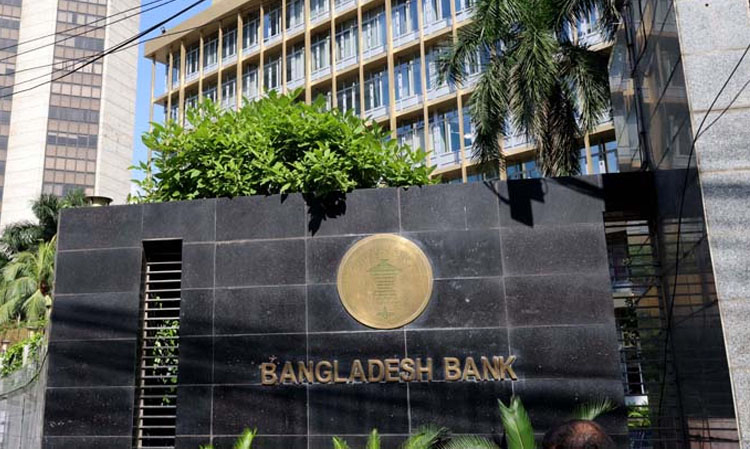
DHAKA, Feb 9, 2026 (BSS) - Bangladesh Bank (BB) has decided to maintain its policy rate at 10 percent for the second half of fiscal year 2025-26 (H2 FY26), reinforcing a firm contractionary stance to anchor inflation.
The central bank, in its latest Monetary Policy Statement (MPS) released today, confirmed that the current strategy has successfully shifted the real policy rate into positive territory-a major milestone aimed at restoring policy credibility and encouraging national savings.
While the primary policy rate and the Standing Lending Facility (SLF) remain unchanged to suppress inflationary pressures, BB Governor Dr Ahsan H Mansur at a press briefing at the central bank headquarters in the city announced a 50-basis-point reduction in the Standing Deposit Facility (SDF).
"BB will maintain the policy rate at 10.0 percent and continue its tight stance in H2 FY26. The Standing Lending Facility (SLF) will be held at 11.5 percent. However, BB decided to lower the SDF from 8.0 percent to 7.5 percent," he added.
He mentioned that the move is designed to transition the banking sector from passive liquidity management to active lending.
The SDF rate has been lowered to 7.5 percent to discourage commercial banks from idling excess funds at the central bank, he added.
By reducing the reward for these deposits, he said, BB aims to stimulate the interbank market and improve the flow of credit to the private sector.
The BB chief noted that achieving a positive real policy rate-where the interest rate exceeds the rate of inflation-is essential for stabilizing the Taka.
However, he cautioned that while the inflation target is set at 7.0 percent, price growth remains sticky due to supply-side bottlenecks and structural rigidities.
He highlighted a significant crowding-out effect, noting that elevated public-sector borrowing to finance the national budget deficit is competing with private enterprises for affordable credit.
This has contributed to historically low private-sector credit growth despite improved liquidity, he added.
According to the MPS, the BB identified three primary near-term risks to price stability: increased consumer spending ahead of the upcoming national elections, heightened seasonal demand during the holy month of Ramadan, and the inflationary impact of a new national pay scale implementation.
The central bank reported a turnaround in the external sector after adopting a market-based exchange-rate regime in May 2025. Clearing $3.5 billion in payment arrears restored global bank confidence. BB also purchased $4.3 billion via interbank auctions, supported by strong remittances, boosting foreign exchange reserves from $25.6 billion in August 2024 to $33.2 billion by December 2025.
However, he noted a flight to quality, as depositors increasingly moved funds toward safer, high-quality institutions.
To support the broader economy during this transition, the central bank has relaxed loan provisioning requirements for banks lending to priority sectors, specifically agriculture and Cottage, Micro, Small, and Medium Enterprises (CMSMEs).
The BB governor also mentioned that the central bank's stabilization efforts are underpinned by the Bank Resolution Ordinance (BRO) 2025 and the Deposit Protection Ordinance (DPO) 2025.
Under these frameworks, he said, the BB has already initiated the liquidation of nine non-bank financial institutions (NBFIs).
"A landmark development under the BRO 2025 is the merger of five troubled Shariah-based lenders to form the Sammilito Islami Bank. The new entity boasts a capital base of Tk 33,000 crore, making it the largest in its segment," he added.
Simultaneously, he said, the DPO 2025 has doubled deposit insurance coverage from Tk 1 lakh to Tk 2 lakhs, a move the central bank says protects 95 percent of individual retail depositors and mitigates the risk of bank runs.
While external accounts have strengthened, he said, the BB remains cautious about lingering vulnerabilities within the banking sector that could impact short-term growth.
The Governor, in a concluding sentiment, expressed optimism that the visibility of reform benefits would grow as governance improves.
He committed to maintaining its guarded monetary approach until a definitive and sustainable deceleration in inflation is observed.
Deputy governors, the Bangladesh Bank Advisor, and the Head of the Bangladesh Financial Intelligence Unit (BFIU), among others, were present on the occasion.