Wednesday
22 July, 2026
News Flash
News Flash
DHAKA, Jan 26, 2026 (BSS) - Speakers at a seminar here today emphasized on
simplification of customs procedures, greater digitization, reduced human
interaction and greater use of technology as these are critical to improving
trade facilitation and sustaining Bangladesh's economic growth.
They made the remarks at a seminar marking the International Customs Day 2026
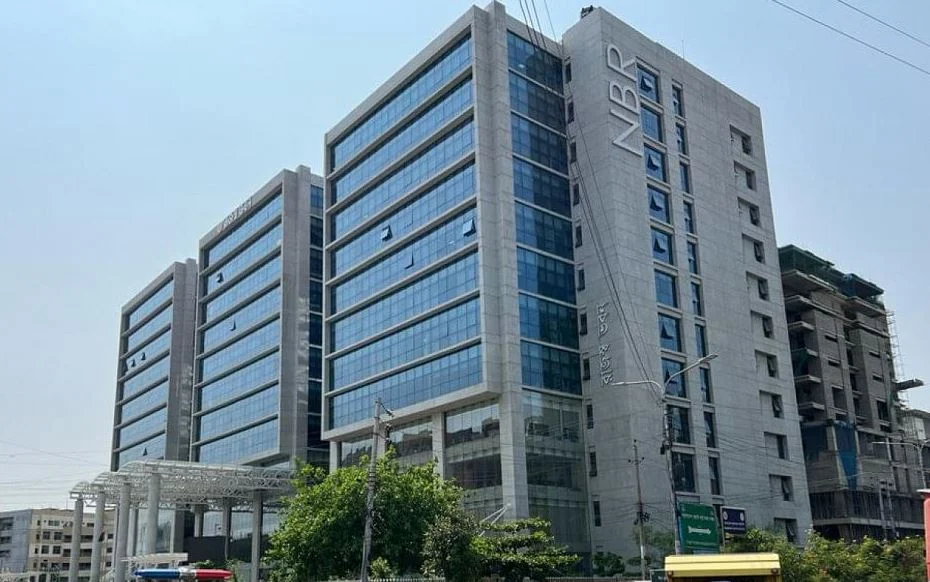
held at the Multipurpose Hall of the National Board of Revenue (NBR) and
presided over by Md Abdur Rahman Khan, secretary of Internal Resources
Division and chairman of the NBR.
Addressing the event, Abdur Rahman Khan said that alongside the government's
efforts for facilitating trade, the businessmen should also abide by the
rules and regulations and thus refrain from mis-declarations.
He said the revenue administration is inherently complex and often unpopular,
as it must balance revenue collection with facilitating legitimate trade and
protecting national interests.
While Bangladesh's tariff rates remain among the highest globally, complaints
from traders are increasingly centered on service delivery and procedural
inefficiencies rather than tariff levels, the NBR Chairman noted.
"The real challenge is not tariffs alone, but how uniformly and transparently
our systems are applied," he said, stressing the need to eliminate
discretionary practices so that identical consignments are not treated
differently by the same officials on the same day.
Rahman said customs modernisation efforts are now focused on ensuring non-
discriminatory services, strengthening supervisory monitoring and expanding
data-driven decision-making.
Greater reliance on automation, analytics and digitized records would
significantly reduce human interaction, enhance transparency and address
longstanding complaints from traders, he added.
Highlighting recent reforms, the NBR Chairman said full automation of bonded
warehouse operations and compulsory digital processes have already shown
positive results, with many activities now being completed remotely. "Once
systems are made mandatory, behavioural change follows," he observed.
Md Rahman also underscored the importance of expanding the Authorised
Economic Operator (AEO) programme, noting that despite its potential to
significantly ease trade for compliant businesses, uptake remains low. "We
must understand why applications remain pending despite having the framework
in place," he concluded.
Commerce Secretary Mahbubur Rahman said trade facilitation has overtaken
revenue growth as the primary performance benchmark for customs
administrations worldwide.
He emphasised that Bangladesh's major trade partners are less concerned about
tariff barriers and more focused on non-tariff barriers, particularly customs
procedures and day-to-day operational practices.
"Process simplification is now the core issue," he said, adding that
Bangladesh's graduation from LDC status makes it imperative to improve
customs efficiency to retain preferential market access through bilateral and
regional trade agreements.
Mahbubur Rahman said customs alone has the capacity to deliver significant
gains in trade facilitation without waiting for broader policy changes,
stressing the need for pragmatic implementation of the Trade Facilitation
Agreement.
Science and Technology Secretary Anwar Hossain highlighted NBR's achievements
in automation, including the National Single Window, non-intrusive inspection
systems and inter-agency digital integration.
He said extended operating hours, including 24/7 testing and port services,
would substantially reduce costs for businesses and consumers.
NBR's proactive leadership in operational reforms and called for
institutionalising responsiveness so that traders do not have to rely on ad
hoc interventions, he praised.
Financial Institutions Division Secretary Nazma Mobarek said revenue
generation through Bangladesh Customs has increased manifold over the years
thanks to the relentless efforts from its staff and up gradation of its
system.
Officials and employees of Bangladesh Customs should work with utmost
professionalism and thus adapt themselves with the evolving technological
advancement, she said.
Nazma also hoped that the Bangladesh Customs staff would work with utmost
honesty and integrity to enhance the revenue collection and thus enrich the
state coffer.
She also acknowledged the role of Customs in protecting the society alongside
boosting revenue collection.
Policy Research Institute (PRI) Chairman Dr Zaidi Sattar said customs
modernisation and trade policy reform are deeply interconnected.
"Trade facilitation should be a primary goal for a modern customs
organisation," he added.
Dr Zaidi Sattar said unless reforms are brought in the next couple of years
in the revenue management system, Bangladesh economy could fall behind
compared to other economies.
He observed that Bangladesh's trade tax structure remains overly complex and
high by international standards, calling for urgent tariff rationalisation
and modernisation.
"Modern customs administrations must prioritise trade facilitation over
revenue maximisation," he said, adding that while overall revenue can still
increase through higher trade volumes, trade taxes should gradually decline
as a share of GDP.
Earlier, Dr Md Al Amin Pramanik, member (Customs: Audit, Modernisation and
International Trade), NBR, delivered the welcome address while Muhammad
Mubinul Kabir, member (Customs: Policy and ICT), NBR made the keynote
presentation.
A documentary on Bangladesh Customs was also screened.
The event included the announcement of the WCO Certificate of Merit 2026 and
the awarding of Authorised Economic Operator (AEO) certificates.