Tuesday
21 July, 2026
News Flash
News Flash
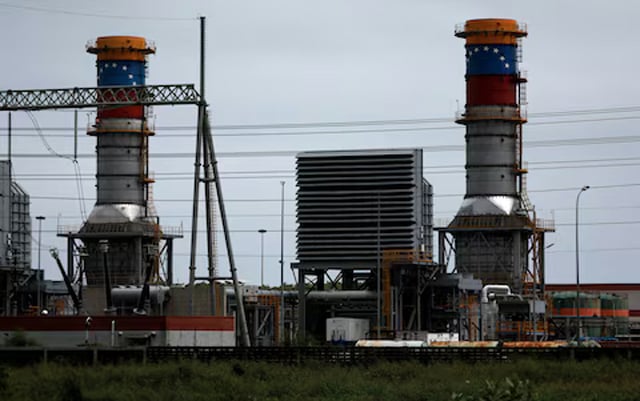
PARIS, France, Jan 9, 2026 (BSS/AFP) - US oil companies with interests in Venezuela are poised to benefit from Donald Trump's plans to take control of Venezuelan oil sales, with the president meeting bosses on Friday to encourage investment in the run-down industry.
Trump told the New York Times on Thursday that the US oversight of Venezuela and its oil could last for years.
He announced on Tuesday that Venezuela's interim leaders had agreed to US-managed marketing of 30-50 million barrels of crude after leader Nicolas Maduro was ousted by a US raid on January 3.
Sanctioned by the US since 2019, Venezuela sits on about a fifth of the world's oil reserves and was once a major crude supplier to the US, with multiple American firms operating in the country until 2007.
However, it produced only around one percent of the world's total crude output in 2024, according to OPEC, having been hampered by years of underinvestment, sanctions, and embargoes.
The Trump administration hopes to revitalise production. Here are the US oil companies with experience and interests in Venezuela that are likely to play an important role:
- Chevron: exempt from sanctions -
Chevron, the second-largest oil producer in the United States, is the only US company still operating in Venezuela.
The Houston-based firm accounts for 25 percent of the country's production, importing over 120,000 barrels of crude per day from Venezuela to the United States in December, according to Bloomberg data.
Present in the South American country since the 1920s, Chevron operates five crude oil production projects in Venezuela as a minority shareholder in a joint venture with Venezuela's Petroleos de Venezuela (PDVSA).
Chevron-PDVSA was established in 2007, when Hugo Chavez's government forced the nationalisation of foreign-owned oil companies.
After Washington imposed sanctions in 2019, the Biden administration granted Chevron a waiver in 2022 in order to keep importing Venezuelan oil amid rising energy prices.
Trump first rescinded and then renewed this waiver in 2025.
"We continue to operate in full compliance with all relevant laws and regulations," a Chevron spokesperson told AFP on Monday in a comment about the current situation.
- ExxonMobil and ConocoPhillips: awaiting compensation -
Two other American oil giants, ExxonMobil and ConocoPhillips, had their assets in Venezuela seized in 2007 after refusing Chavez's terms, which demanded the state take a minimum 60 percent stake in operations.
Both firms took international legal action, kickstarting years of litigation that they ultimately won.
The World Bank's International Centre for Settlement of Investment Disputes (ICSID) ruled in 2014 that the Venezuelan government should pay ExxonMobil $1.6 billion in compensation for taking its Cerro Negro project.
The award was later lowered, but Venezuela was still ordered to pay millions to the US oil giant.
The arbitration court of the International Chamber of Commerce ordered in 2018 that the Venezuelan government pay $2 billion for the "unlawful and uncompensated expropriation" of ConocoPhillips in the Hamaca and Petrozuata heavy crude oil projects.
Another decision by the ICSID in 2019 ordered Venezuela to pay $8.7 billion to the company for the expropriations.
Maduro's anti-US government, embroiled in economic crisis and corruption, never paid and both ExxonMobil and ConocoPhillips are still awaiting compensation.
ExxonMobil has yet to comment on Trump's suggestion that oil companies invest massively in Venezuela's oil sector.
ConocoPhillips is "monitoring developments in Venezuela and their potential implications for global energy supply and stability," a spokesperson told AFP on Tuesday, adding that "it would be premature to speculate on any future business activities or investments."
- Refiners of Venezuelan oil -
Data from the US Energy Information Administration (EIA) showed that in 2025 multiple oil refiners bought Venezuelan crude, which is heavy and needs to be processed in special refineries that cannot treat other sorts of oil.
Valero, the biggest US buyer of Venezuelan crude, purchased 1.5 million barrels in October 2025 to process in its Texas and Louisiana refineries.
Other buyers of Venezuelan oil last year were Phillips 66, Paulsboro Refining (PBF), Chevron, Vitol, ExxonMobil, and Houston Refining.
All of these companies' stock prices have risen since January 3, except for ExxonMobil.
In 2018, before US sanctions, at least 10 companies were importing crude oil from Venezuela.
Amongst them were Vitol and Trafigura, and US officials are considering selling them Venezuelan oil, according to the Wall Street Journal.
An increase in Venezuelan crude imports would likely boost the US Gulf Coast's economy.
However, experts say shoring up Venezuela's production will take years.