Saturday
06 June, 2026
News Flash
News Flash
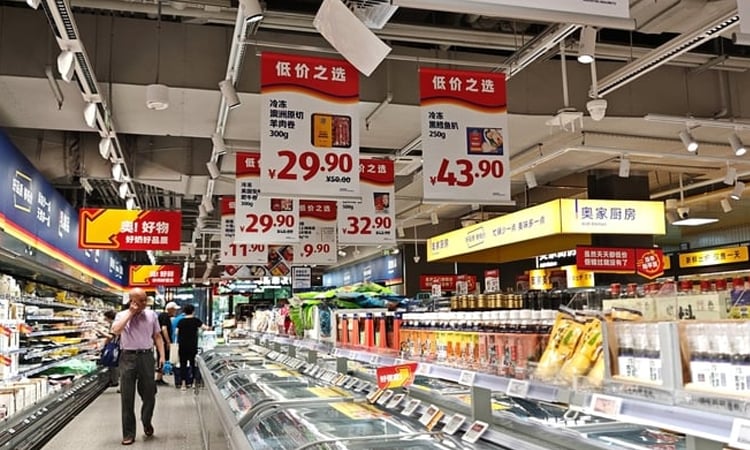
BEIJING, Dec 15, 2025 (BSS/AFP) - China's retail sales grew last month at their slowest pace in nearly three years, official data showed Monday, underlining the tough battle leaders face in kickstarting consumption in the world's number two economy.
Beijing has in recent years sought to revive sentiment in the domestic economy, which has been battered by a prolonged debt crisis in the country's vast property market.
Reversing the slump has become a top priority for leaders, who have vowed repeatedly to boost weak activity at home even as exports to the rest of the world boom.
Retail sales, a key indicator of consumption, edged up 1.3 percent year-on-year in November, the National Bureau of Statistics (NBS) said -- the weakest pace since December 2022, when stringent zero-Covid measures ended.
The reading was also well short of a Bloomberg forecast of 2.9 percent, which was the same as October's figure.
Monday's data "point to broad-based weakness in domestic activity", wrote Zichun Huang of Capital Economics in a note.
"Policy support should help drive a partial recovery in the coming months, but this probably won't prevent China's growth from remaining weak across 2026 as a whole," she said.
Despite the spending slump, China's economy has been supported by robust exports, which have remained resilient in the face of this year's fierce trade war with the United States.
The boom in shipments has kept production humming in the manufacturing powerhouse, which has already reached a historic trade surplus of more than $1 trillion this year.
But the official data showed Monday that factory activity growth weakened last month, with industrial production sliding to 4.8 percent year-on-year -- the slowest in more than a year.
That figure narrowly missed a Bloomberg forecast of five percent and was also slightly down from 4.9 percent in October.
"External demand for Chinese goods appears to be picking up... but that was offset by weakness in domestic demand," wrote Huang.
- Spenders cautious -
In a further sign of mounting pressure this year, fixed-asset investment through the end of November was down 2.6 percent compared with the same period in 2024, the NBS said Monday.
Leaders last week held a key meeting focused on the economy at which they pledged to boost consumption, stabilise the property market and create more employment opportunities, state media reported.
The annual closed-door discussions see officials deliberate core economic strategy for the year ahead, though specific policy announcements are not typically made.
Economists have long called for Beijing to shift towards a growth model powered more by domestic spending than traditional engines of past decades like exports and manufacturing.
The official data Monday showed that spenders remain cautious.
The price of homes -- a key store of wealth for Chinese households -- continued to drop.
New residential property prices in 64 out of 70 major cities surveyed by the NBS fell last month year-on-year.
"The contraction of fixed-asset investment and the drop of property prices in recent months have been transmitted to the consumer sentiment," wrote Zhiwei Zhang, president and chief economist at Pinpoint Asset Management, in a note reacting to Monday's data.
"I expect fiscal and monetary policies to be loosened somewhat in (the first three months of next year) to stabilise the economic momentum," he said.
The country's surveyed unemployment rate stood at 5.1 percent in November, official data showed Monday, unchanged from the previous month.