Saturday
06 June, 2026
News Flash
News Flash
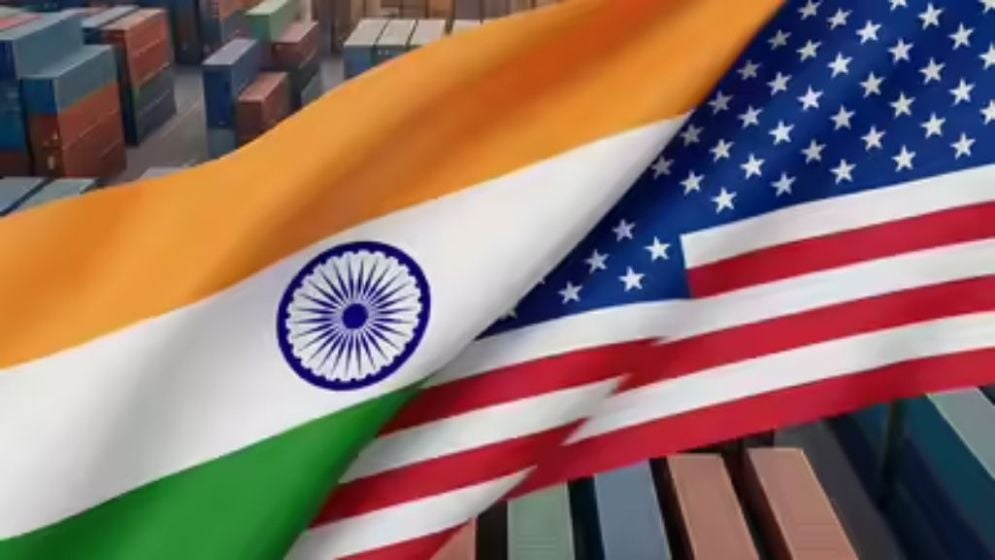
MUMBAI, India, Dec 10, 2025 (BSS/AFP) - US and Indian trade negotiators begin two days of talks Wednesday as they try to reach a deal amid geopolitical turbulence after Washington hit New Delhi with huge tariffs over its purchases of Russian oil.
The 50 percent levies on most goods was imposed in August, with US officials arguing the imports of discounted Russian crude effectively bankroll Moscow's war in Ukraine.
Deputy US Trade Representative Rick Switzer's visit comes a week after Prime Minister Narendra Modi embraced Russian President Vladimir Putin in New Delhi.
India's foreign ministry described Switzer's meetings as a "familiarisation" trip.
India was among the first countries to begin trade talks after President Donald Trump unveiled sweeping tariffs on most US trade partners in April.
But it is one of the few major economies still without an agreement, raising risks for jobs, economic growth and markets.
- What's at stake? -
India is the world's fastest-growing major economy and recorded a $45.8 billion goods trade deficit with the United States in 2024.
Large export categories such as smartphones and generic drugs are exempt from Trump's tariffs, but many labour-intensive industries are not.
That's a serious blow for a country already struggling to generate well-paid jobs for millions of young graduates, and the turmoil threatens Modi's ambition to lift the country into high-income status.
Exports fell nearly 12 percent year-on-year in October, driven by a plunge in US-bound shipments.
The Global Trade Research Initiative (GTRI) estimates that labour-heavy sectors -- gems and jewellery, textiles and seafood -- saw export drops of 37-60 percent between May and September.
Foreign investors have dumped more than $16 billion in Indian equities this year, helping push the rupee to a record low past 90 per dollar.
The International Monetary Fund has also cut India's 2026-27 growth forecast from 6.4 percent to 6.2 percent, assuming "prolonged 50 percent US tariffs".
Exports could shrink to about $49.6 billion this fiscal year, from $86.5 billion last year, potentially knocking up to 80 basis points off growth, according to the GTRI.
- The role of Russian oil -
India enthusiastically bought discounted Russian crude after the 2022 invasion of Ukraine as Moscow was hammered with severe sanctions including on its sale of oil.
But Trump's decision to link trade policy to geopolitics upended US-India relations in August, with roughly half of the tariff burden stemming from Washington's attempt to penalise those purchases.
The US president has repeatedly claimed India either plans to stop, or has already mostly stopped, buying Russian oil -- a claim New Delhi has neither confirmed nor denied.
But when in the Indian capital, Putin offered to "continue uninterrupted shipments of fuel". Modi did not comment directly on oil flows.
However, top buyer Reliance Industries said in November it stopped importing Russian oil for its export-focused refinery, while smaller refiners like HPCL-Mittal Energy have said they have stopped entirely.
Analysts at trade intelligence platform Kpler expect a "notable dip" in India's December-January imports.
Whether that decline will sway Washington is unclear.
- Other issues -
Talks also stalled over agriculture, with India resisting pressure to cut tariffs on staples like rice and wheat -- wary of angering its farmers, a politically powerful constituency.
A senior Indian commerce ministry official told AFP that these issues are "largely resolved", although Trump on Monday also criticised the country for "dumping" rice into the United States.
Negotiating a trade pact is complicated by the need to address Trump's so-called reciprocal tariffs, though both tracks are linked, officials say.
"These are two separate, parallel negotiations that are going on, but one will feed into another," Commerce Secretary Rajesh Agrawal told an industry event last week.
- Is a breakthrough likely?
Relations have improved since August, with several smaller deals advancing.
That includes US approval in November for two arms sales worth nearly $93 million, and New Delhi's "significant" deal for the United States to supply nearly 10 percent of its liquefied petroleum gas (LPG) imports.
Energy commitments have anchored past US trade deals, and experts say the LPG contract may help convince Washington that India is reducing its reliance on Russia.