Saturday
13 June, 2026
PARIS, Dec 5, 2021 (BSS/AFP) - The idea of spending millions on non-
existent land may sound ludicrous -- but feverish predictions of a virtual
reality future are pushing investors to bet big on digital real estate.
This week, New York-based company Republic Realm announced it had spent a
record-breaking $4.3 million on digital land through The Sandbox, one of
several "virtual world" websites where people can socialise, play games and
even attend concerts.
That came hot on the heels of a $2.4-million land purchase in late
November on a rival platform, Decentraland, by Canadian crypto company
Tokens.com. And days before that, Barbados announced plans to open a
"metaverse embassy" in Decentraland.
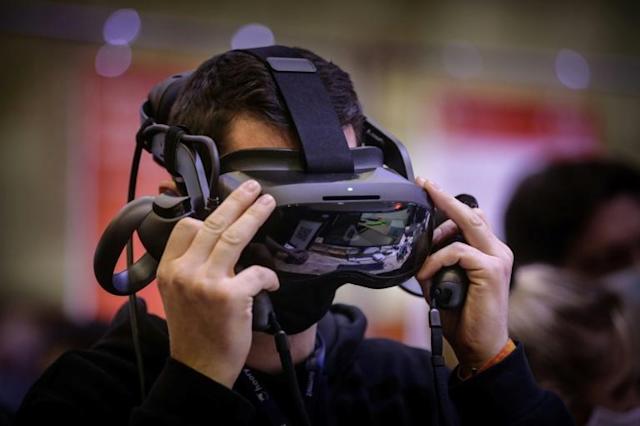
Such websites bill themselves as a prototype of the metaverse, a future
internet where online experiences like chatting to a friend would eventually
feel face-to-face thanks to virtual reality (VR) headsets.
"Metaverse" has been a Silicon Valley buzzword for months, but interest
soared in October after Facebook's parent company renamed itself "Meta" as it
shifts its focus towards VR.
The Facebook rebrand "introduced the term 'metaverse' to millions of
people a lot faster than I would have ever imagined," said Cathy Hackl, a
tech consultant who advises companies on entering the metaverse.
According to crypto data site Dapp, land worth more than $100 million has
sold in the past week across the four largest metaverse sites, The Sandbox,
Decentraland, CryptoVoxels, and Somnium Space.
For Hackl, it's unsurprising that the market is booming, spawning an
entire ecosystem around virtual real estate, from rents to land developers.
"We're trying to translate the way we understand physical goods into the
virtual world," she told AFP.
And while it may be some time before these sites operate as true
metaverses, transporting us elsewhere with VR goggles, digital land is
already functioning as an asset just like real land, said Hackl.
"They can build on it, they can rent it out, they can sell it," she said.
- 'Fifth Avenue of the metaverse' - Tokens.com has bought a prime patch in
Decentraland's Fashion Street district, which the platform hopes to develop
as a home for luxury brands' virtual stores.
"If I hadn't done the research and understood that this is valuable
property, it would seem absolutely crazy," admitted Tokens.com CEO Andrew
Kiguel.
Kiguel spent 20 years as an investment banker focused on real estate. He
insists the Decentraland plot makes exactly the same kind of business sense
as it would in the real world: it's in a trendy area with high footfall.
"That is advertising and event space where people are going to
congregate," he explained, pointing to a recent virtual musical festival in
Decentraland which attracted 50,000 visitors.
Luxury brands are already venturing into the metaverse -- a Gucci handbag
sold on the Roblox platform in May for more than the real version -- and
Kiguel hopes Fashion Street will become a shopping destination akin to New
York's Fifth Avenue.
As for how the land could be used to make money, "it can be as simple as
having a billboard, or it can be as complex as having a storefront with an
actual employee," he said.
"You could walk in with your avatar and have 3D digital representations of
a shoe that you can hold, and ask questions."
- Second Life, rebooted -
As far back as 2006, a real estate developer made headlines after making
$1 million from land sold on the virtual world site Second Life.
While Second Life remains active, proponents of its next-generation rivals
point out a key difference.
In Decentraland, everything from land to virtual artwork comes in the form
of a non-fungible token, or NFT.
Some people have spent tens of thousands of dollars on these digital
items, and the concept has generated scepticism as well as excitement.
But Kiguel predicts this form of digital ownership will become widespread
in the coming years, because the blockchain technology behind it creates
trust and transparency when making transactions.
"I can see the ownership history, what's been paid for it and how it's
been transferred around," he said.
But the investment is not without its risks -- particularly given the
volatility of the cryptocurrencies used to buy NFTs.
And while virtual concerts on sites like Roblox and Fortnite have drawn
tens of millions of viewers, the sparse data available suggests traffic on
metaverses like Decentraland lags far behind that of established social media
sites like Facebook and Instagram.
Ultimately the value of the land investments depends on whether people
start flocking to these sites.
"I know it all sounds quite ludicrous," said Kiguel. "But there's a vision
behind it."