Sunday
13 September, 2026
News Flash
News Flash
By Md Aynal Haque
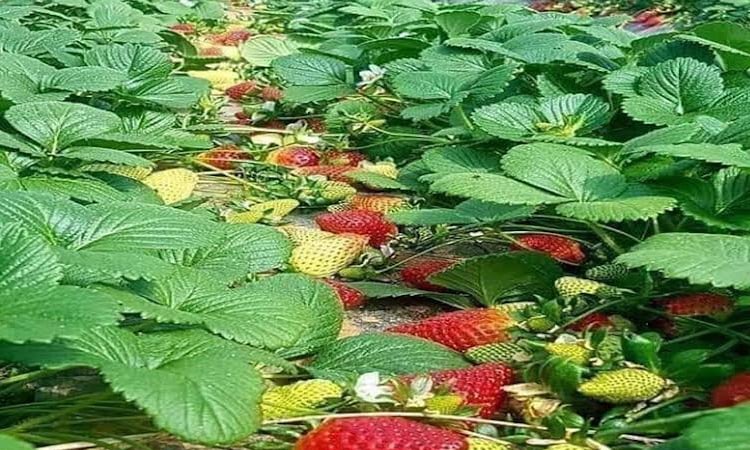
RAJSHAHI, Jan 25, 2026 (BSS) - Farmers in Rajshahi, part of the Barind region, are increasingly turning to commercial strawberry cultivation, attracted by its ease of growth and high profitability.
Strawberries, a globally popular fruit, are gaining steady popularity in Bangladesh. According to the Department of Agriculture Extension (DAE) and local farmers, strawberry plants start bearing fruit within a month of planting, with production continuing for four to five months.
This quick and sustained yield makes strawberry farming more profitable than many other crops. In Rajshahi district, strawberry cultivation has expanded by an additional two hectares this year.
The Agriculture Office noted that farmers' interest in strawberries is growing due to strong production and marketing systems. Once the plants begin fruiting, strawberries can be harvested and sold every two days.
In Paba upazila's Kismat Kukhundi area, Golam Mostafa has cultivated strawberries on three bighas and three kathas of land. He planted saplings on the 20th of Kartik, and current yields are promising.
"We are getting even better strawberries than expected," he said. On average, about 70 kilograms of strawberries are harvested per bigha each day.
The cost of cultivating one bigha of strawberries is around Tk 175,000. The fruit is sent to markets in Rajshahi, Dhaka-including Kawran Bazar, Bakshi Bazar, and Baipail-as well as Chattogram and Sylhet.
In the initial stages, yields of 300 to 500 grams per plant were sold at Tk 1,500 per kilogram. Harvesting began on the 15th of Poush, and current wholesale prices range from Tk 500 to Tk 550 per kilogram.
Rajab Ali from Mahishalbari village in Godagari upazila grows strawberries on four kathas of land.
He said the plants will continue to bear fruit for at least five months, with the highest yields expected in Magh, Falgun, and Chaitra. Even toward the end of Chaitra, strawberries will still be available, though in smaller quantities. The season is expected to end by mid-Baishakh.
Manirul Islam of Chaitanyapur village said his strawberries are harvested every alternate day. On harvesting days, eight to ten workers are employed, while two laborers work daily on the farm. Their wages are paid from the proceeds of strawberry sales.
"Since starting strawberry cultivation, I no longer need other work. I left my previous job to focus entirely on strawberry farming," he added.
Professor Rafiqul Islam of Rajshahi University's Department of Botany said strawberry cultivation is as easy as growing potatoes or eggplants. Seedlings should be planted in rows between November and December.
He described strawberries as a "high-value crop," noting that flowers appear within a month and fruits are available by March. Each plant produces around 250 to 300 grams of fruit, with about 6,000 plants possible per bigha.
At the farmer level, strawberries sell for around Tk 600 per kilogram. Commercial cultivation allows for both local and international market opportunities.
Professor Islam added that strawberry farming is easier and more profitable than many other crops, attracting a growing number of unemployed youth. Strawberries are used in ice cream, jam, jelly, chocolate, biscuits, and other products, creating opportunities for young farmers to supply markets across the country.
Professor Dr. Manjur Hossain, also from Rajshahi University's Department of Botany and a strawberry researcher, said Bangladeshi varieties rank among the best globally. Using tissue culture methods, three varieties have been developed, well suited to the region's soil and environment, as shown in trial fields.
Mita Sarker, Additional Deputy Director (Crops) of DAE, said strawberries are used not only in food but also in jelly, cakes, medicines, and cosmetics such as soaps. Demand is rising steadily, encouraging more farmers, especially educated youth, to cultivate the crop, creating employment opportunities.
She added that this year's cultivation has increased compared to last year, supported by favorable weather conditions that contributed to good production.