Friday
11 September, 2026
By Tanvir Hayat Khan
NETROKONA, Dec 25, 2025 (BSS) - Farmers in the haor areas of the district are fully engaged in cultivating Boro paddy as floodwaters recede with the onset of winter, bringing renewed life to vast stretches of farmland.
With the first light of the winter sun filtering through bamboo fences, the haor landscape begins to transform. As water drains away, a thick layer of fertile silt emerges-soil that farmers regard not as mud, but as the promise of a future harvest. This naturally deposited silt, accumulated over months under water, provides ideal conditions for Boro cultivation.
In Madan, Mohanganj and Khaliajuri upazilas, around 42,000 hectares of land remain submerged during the monsoon. Once the water recedes in winter, farmers construct small embankments to retain water for irrigation and prepare the land for Boro, the only crop grown annually in the haor region.
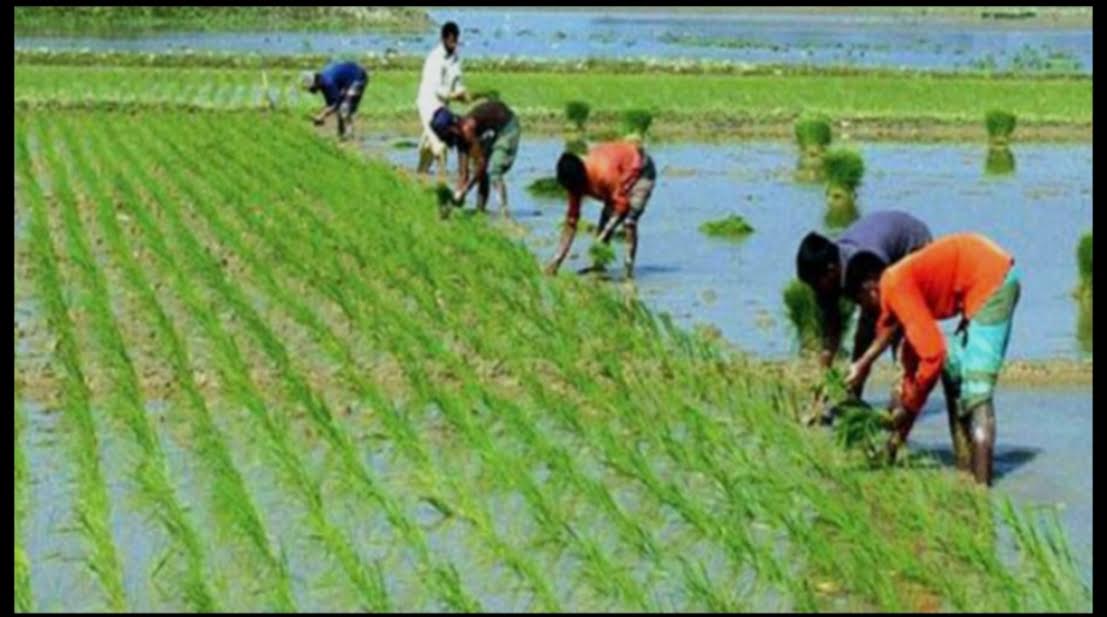
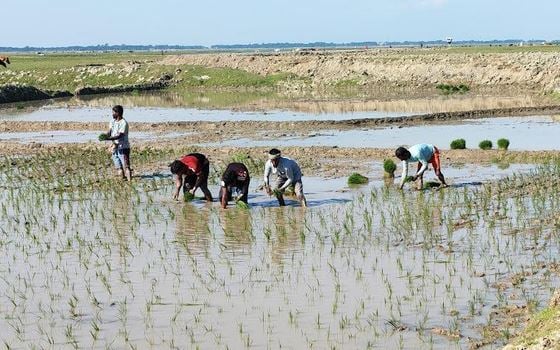
A visit to the haor areas reveals scenes of intense agricultural activity. Farmers are seen lifting seedlings-locally known as "jala"-from seedbeds, preparing fields with tractors, repairing boats stranded on the shores, and taking brief lunch breaks atop embankments before returning to work.
Mechanization has become increasingly common in haor agriculture. Traditional methods involving cattle and plows have largely been replaced by tractors, power tillers and harvesting machines. While modern technology has reduced labor and time, it has also raised production costs.
Boro plays a crucial role in ensuring food security, not only for Netrokona but also for other parts of the country. The rice harvested from haor areas contributes significantly to national grain reserves.
Farmer Fazlur Rahman of Kuliati village in Madan upazila is cultivating Boro on ancestral land in Kaya haor. This year, he plans to farm about 50 kathas of land and has already planted seedlings on 15 kathas.
"Over the last three years, we have been relieved because there were no major floods," he said. "We are working day and night to protect this only crop. Early-maturing rice varieties are being planted so harvesting can be completed before the monsoon arrives."
Farmers in Nurpur Boali village of Khaliajuri upazila, however, expressed concern over rising cultivation costs. Increased fuel prices have driven up irrigation expenses, while labor shortages-caused by workers migrating to cities such as Dhaka, Chattogram and Sylhet-have forced farmers to pay higher wages. The growing use of machinery has further increased per-katha
production costs.
According to the District Training Officer of the Department of Agricultural Extension (DAE), Dr. Chandan Kumar Mohapatra, the district has set a target to cultivate Boro rice on 185,548 hectares of land this year, with an expected production of 881,115 metric tons.
"In the haor areas alone, Boro cultivation has begun on 42,000 hectares, and around 1,200 hectares have already been planted," he said.
"Cultivation of BRRI varieties such as 74, 88, 89, 101, 102, 104 and 105, along with BINA-24, BINA-25 and hybrid rice, is increasing. Our field-level officers are providing technical support from seedbed preparation to harvesting, especially considering the risk of flash floods," the DAE
official said, adding that the flash floods remain the biggest threat to haor agriculture. To mitigate this risk, embankments are constructed and repaired every year.
District Water Development Board Executive Engineer Md. Sakhawat Hossain said that preparatory meetings have been completed and work will begin within days.
About 149 kilometers of embankments are planned for construction or renovation this year, he said, adding, "Although the soil is still wet in many places, work will start soon and we expect completion within the scheduled time frame."
Despite the biting cold of Paush, farmers continue working from dawn to dusk. Their resilience and determination reflect the enduring spirit of haor communities, who remain hopeful that, once again, they will overcome natural challenges and bring home the rewards of their hard labor.