Friday
22 May, 2026
News Flash
News Flash
By Enamul Haque Ena
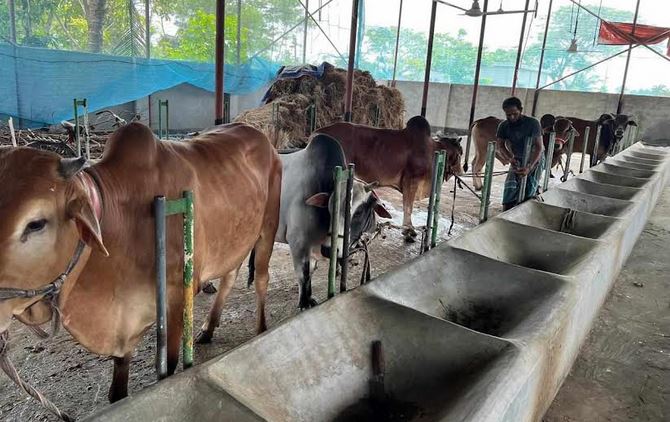
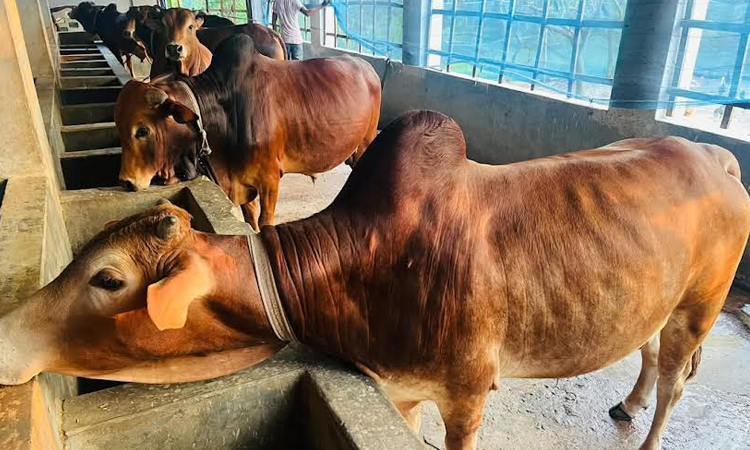
PATUAKHALI, Dec 20, 2025 (BSS) - Cattle rearing in the vast char areas of Dashmina upazila of the district has evolved from a supplementary livelihood into a major driver of the local economy, significantly contributing to poverty alleviation and employment generation.
Alongside agriculture, thousands of small and marginal farmers in the upazila are becoming self-reliant through cow and buffalo rearing, mostly using their own labour and limited capital, without depending on bank loans.
According to the Upazila Livestock Office, more than 5,620 cows and buffaloes are currently being reared in Dashmina. Of these, around 2,500 are in Rangopaldi and Char Borhan unions, 1,300 in Alipura, 1,100 in Betagi-Sankipur, 1,150 in Baharampur, 1,900 in Banshbaria and about 1,950 in Dashmina Sadar.
Officials said nearly 65 percent of the total cattle population are buffaloes-an unusually high proportion compared to other upazilas. The char environment, with its wetlands and natural grasslands, is particularly suitable for buffalo rearing. A buffalo can produce nearly twice as much milk and one-and-a-half times more meat than a local cow.
Estimates suggest that existing buffaloes in Dashmina have the potential to produce around 1.05 million litres of milk and about 7.4 million kilograms of meat annually.
Abdus Salam, a farmer from Char Hadi, said cattle rearing has transformed his family's livelihood.
"Earlier, I depended only on paddy cultivation, which was barely enough to survive. Now I have three cows and a buffalo and earn Tk 800 to Tk 1,000 a day from milk sales," he said.
Women farmers are also benefiting from livestock rearing. Chhakina Begum of Char Banshbaria said buffalo rearing is profitable as feed costs are low in the char areas.
"If we receive government support, we could expand our farms and increase our income," she said.
Duck farming has also gained popularity in the wetland-rich chars. Salma Begum of Char Shahjalal and Md Yunus Hawlader of Char Borhan said ducks can graze freely after paddy harvests, reducing costs while increasing profits. They added that government assistance could further boost production.
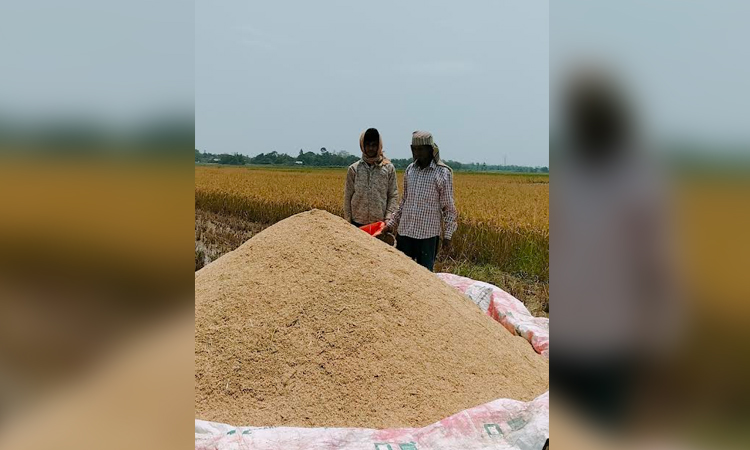
The Upazila Agriculture Office reported that around 25 percent of Dashmina's land consists of chars. Of this, nearly 10 percent remains uncultivated, while about 75 percent is mono-cropped, leaving large areas unused for at least six months each year. During these periods, livestock rearing has emerged as a vital alternative source of income.
Despite the potential, farmers face several challenges. Karim Molla of Char Samad said sick animals often have to be taken to the mainland for treatment, causing delays and sometimes resulting in losses.
"Many animals die because veterinary services are not readily available in the chars," he said.
Experts believe that declaring char areas as planned pastures, introducing improved grass cultivation, ensuring regular vaccination, providing low-interest loans, training farmers and improving marketing facilities could transform Dashmina into a major milk and meat production zone.
Dashmina Upazila Livestock Officer Shuvendu Sarkar said the area has "huge potential" for cow and buffalo rearing due to its natural pastures and wetlands. He stressed the need for regular deworming, vaccination, farmer training and strengthened veterinary services.
"If a coordinated government initiative is taken, Dashmina's char pastures could become a major hub for milk and meat production, contributing significantly to poverty reduction, employment generation and national economic growth," he said.
Local residents expressed hope that combined efforts by the government and private sector would soon turn Dashmina's neglected char lands into an important livestock-based economic zone.